Showing posts with label Culture. Show all posts

Apr 25, 2016

The One Method I’ve Used to Eliminate Bad Tech Hires by ayasin

Let’s be real. Interviews are a terrible way to hire tech candidates. Not only do you not get a real sense of the candidate, they often weed out good candidates in favor of bad ones.
In this fantastic article on Medium by Eric Elliott, he talks about many of the techniques that work and don’t work for interviewing engineers.
In regards to what works the best, I found that these 2 ideas work the best when combined.
  • PAID Sample project assignment (err on the side of paying fairly — say $100+/hour for estimated completion time — if the problem should require 2 hours to complete, offer $200)
  • Bring the candidate in and discuss the solution. Let the candidate talk about their design decisions, challenge them as you would any team member and let them provide their reasoning.
Paying candidates to work on a simple project and then discuss it with our team has almost single handedly eliminated any bad hiring decisions. Paying a candidate that gives you a terrible solution (or no solution) is FAR cheaper (both financially and emotionally) than hiring the wrong person, going through a 3 month performance improvement plan to try to make them the right person and eventually firing them.
We have gone from “This candidate is exactly what we need” to “I have serious doubts about working with this candidate long term” and we’ve had candidates change our bad perception of them using this technique. It’s very easy for someone to embellish (to put it generously) their resume, and coding trivia can be memorized, but it’s really hard for someone to fake actual skill.

Here’s why paying candidates to solve problems works

For the Employer
  • Since the candidate is getting paid, the candidate treats it as a legit consulting session and therefore gives her best effort in solving the problem.
  • It’s an indication to the candidate how they will be treated in the near future if they decide to join.
  • It allows a mock work interaction with the candidate at a very low risk cost to you. After the project is complete, you can bring the candidate in and ask them questions about their actual design/coding decisions. This lets you get a sense of how they communicate, take criticism/questioning and if they are able to provide solid reasoning behind their choices.
For the Candidate
  • It gives the candidate a real life sense of how you interact with people on the team
  • Allows them to showcase some of the skills that are on their resume, but may not pop from just reading it
  • Allows them to give you a sense of what they feel is important in a non-judgemental way. For example, did the person write a test for every line of code? No? Maybe that’s not really important to them and maybe that’s totally valid. You’d never get that from just asking them do you do TDD? Everyone will say tests are important…and they are. The thing most people disagree about is how important, this will show that.

I have 6 rules when giving this interview method

RULE #1 — Give them the weekend to solve the problem.
This is where I and Eric slightly disagree. 2 hours just isn’t enough time to see how well someone can come up with an appropriate solution.
What I like to do is invite them to the office on a Friday and go over the problem at hand and how I would like for them to solve it. Then I’ll hand it off to them and set up time on Monday to review their solution.
I’ll provide them with certain technologies that should be used for the solution and let them use other tools or technologies at their discretion. For example, I may say please use functional reactive principles in JS to solve this problem, but the decision of using Kefir, Bacon, or RX is left up to them.
RULE #2 — DON’T use a real problem because of tribe knowledge needed to fix.
This goes hand in hand with Rule #1, but unless you’re hiring a customer service rep, it’s almost impossible to hand someone a computer and say OK, Fix this issue happening in our proprietary system using the tools that normally everyone gets properly trained on.
Give a problem that is very self contained.
RULE #3 — The solution you’re expecting should be clear, but open for improvement.
For example. If I’m interviewing a web developer, I’ll give him a sample clear scenario:
Create a single page app that lets me enter movies in my home movie collection, store them in offline storage and search through them. I want to search by Genre, Title & Actors.
I actually don’t tell them further directions like use web storage vs cookies, or make it responsive on multiple platforms and use a custom stylesheet. I leave that up to them. Some choose to do what we asked, and some do much more.
In the end, what matters is that we like the end result.
I don’t say “I like movies, create me a nice movie website”, or “How would you architect IMDB if you had to create it from scratch.” I want the task to be simple enough that the engineer can provide a solution and challenging enough so they can use their skills to create something special.
RULE #4 — Let them present their solution to a group on Monday.
The biggest issue I have seen with tech hires is that they can become very defensive over their solution. I will purposely challenge their solution to see how they react.
If they get defensive, it’s an immediate no-go. Remember, there’s a difference between defending which is good and being defensive which is bad. The difference is that the former is based on rational facts, the other is based on emotion.
A key aspect of this is that everyone in the group MUST come prepared, having looked through the solution.
RULE #5 — Write the problem down for them to take home.
Be clear about what technologies, tools and look you’re after, and the standards being judged. At the same time, leave the final solution open enough that the candidate can add their own flair. Let them ask you any questions they have on Friday, and make sure to be available for their questions via email over the weekend. The goal is to create an environment of success (hopefully like you would for an employee).
RULE #6 — Pay them immediately on Monday
Hire them or not, something about giving them a check after they present their solution is the best way to start or end a relationship.
Another way to do this is to use June [disclaimer: I’m a co-founder there] to facilitate the interview and payment.

To hire or not to hire that is the question

Indicators you should hire this person:
  • During the meeting on Friday they asked a lot of clarifying questions
  • The questions were thought out and made sure that nothing was misunderstood
  • The solution addressed your problem using the technologies and techniques you prescribed
  • They read the entire problem and followed the instructions correctly (i.e. if the problem said use PostgreSQL, they didn’t give you queries that only work on Oracle DBs).
Indicators you shouldn’t hire this person:
  • They refuse to do the project because “someone will hire me without it”.
  • Didn’t complete the project correctly
  • They can’t articulate their design/coding decisions and why they were made.
  • They get defensive when presenting their solution

In Summary

Your mileage may vary, but I found this technique to work wonders for hiring talented tech talent. While my sample size may not be huge, I’ve yet to have it lead to a bad hire.

About Me

I’m Amir Yasin, the CTO and Co-Founder of June. Get Paid to speak with the best IT recruiters in the world.
I’m a polyglot developer deeply interested in high performance, scalability, software architecture and generally solving hard problems. You can follow me on Medium where I blog about software engineering, follow me on Twitter where I occasionally say interesting things, or check out my contributions to the FOSS community on GitHub.
If you enjoyed this post, I’d really appreciate a recommend (just click the heart below).
Go to the profile of ayasin

ayasin

_architect _developer
Apr 24, 2016

Titles are Toxic By rands

You have a job and it has a name. A name of convenience. It exists so that when someone asks, “What do you do?” you can simply say, “I am a software engineer” rather than saying, “Well, there are these things called computers and computers run software and humans write software and I am one of those humans”.
Chances are, you also have a title. It was given to you when you first arrived at your fine company and you probably didn’t think about it. You argued for more salary or more stock, but the title was just there — Sr. Software Engineer 2. You didn’t think about where the title came from or the fact that it defined your compensation and promotion path for the duration of your stay with the company.
You didn’t think a lot about title because you didn’t really have a choice. The decision to create titles happened long before you were there, but you still need to understand why titles are toxic.

On the Origin of Titles

When a company is small, everyone does a little bit of everything, so titles make no sense. My first title at Netscape was “Bitsifter”. Sure, there were some titles, but they were titles of convenience so external parties could apply their antiquated title frameworks to folks on our team during meetings. “Oh, I see, you’re the VP of Product… how very impressive.”
The unspoken agreement was that these titles were necessary to map to a dimwitted external reality where someone would look at a business card and apply an immediate judgment on ability based on title. It’s absurd when you think about it — the fact that I’d hand you a business card that read “VP” and you’d leap to the immediate assumption: “Since his title is VP, he must be important. I should be talking to him”. I understand this is how a lot of the world works, but it’s precisely this type of reasoning that makes titles toxic. They didn’t start out toxic. They started out as a means to give folks a path towards growth.

The Leadership Path

When your company gets a little larger, when the team has been on board for more than a few years, you need to give folks a growth path. There are two paths that need definition. I’m going to define these relative to software engineering, but my gut feeling is that these paths are similar for many types of jobs.
The first track created is the lead or management track, and this shows up first organically out of necessity because there are too many of you. At 25 people you could keep everyone on the same page because each person was able to maintain state with each other person. The leadership track shows up so that communication and decisions can be sensibly organized.
This is a major development for a growing company because this might be the first title arriving. Lead or manager, whatever you call it, the question is the same: is it a job or a title? A job is a well-defined thing that has a clear and easy to understand set of responsibilities. A title often has neither.
A good way to explain this is to imagine the poor use of titles in Toxic Title Douchebag World. In this imaginary world, the first five hires after the founders have given themselves impressive sounding titles. VP of Business Development or Director of Advanced Technology. If you’re employee #34 and someone is walking around the building calling themselves the SVP of Platform Engineering, you might be in Toxic Title Douchebag World.
I’m not suggesting that this is not an accomplished person. I’m not saying that they don’t have a wealth of experience or fantastic ideas, but never in my life have I ever stared at a fancy title and immediately understood the person’s value. It took time. I spent time with those people — we debated, we discussed, we disagreed — and only then did I decide: “This guy… he really knows his stuff. I have much to learn.” In Toxic Title Douchebag World, titles are designed to document the value of an individual sans proof. They are designed to create an unnecessary social hierarchy based on ego.
When that first title shows up for your first leader, ask yourself: does this title reflect a job I consider to be real and of obvious value? If the answer is anything other than a resounding yes, your titles might be toxic.

The People Path

Let’s say you’ve avoided Toxic Title Douchebag World when the leadership titles landed. Let’s make the big assumption that everyone sees leadership jobs as equivalent to any other jobs. Congratulations. There’s more opportunity for toxicity forthcoming.
The second growth path that needs to be defined is harder than the leadership path because of the inherent difficulty in defining the jobs. The forcing function for leadership was driven by a need to improve efficiency, communication, and accountability. The forcing function for the People Path is growth.
You likely didn’t define the Leadership Path out of a need to grow your people; you did it to scale your company. The fact that this new job is seen as a promotion is a happy byproduct of the job’s existence. Problem is, the majority of your company is never going to be managers, but they want to grow, too.
This is where a critical mistake is usually made. The folks who successfully landed the lead title think, “Well, when we needed leaders we called them leads, so why don’t we create new titles for folks to give them the same sense of promotion and advancement.”
No no no no and no. To understand how this breaks down, let’s head back to Toxic Title Douchebag World.
In this world, our SVP of Talent looks at his 119 employes and 17 leads and thinks, “Well, the folks who are the most cranky are the engineers who have been here the longest, so I’ll do what I did at my former company — I’ll create titles: Associate Engineer, Engineer, Senior Engineer, Staff Engineer, and Architect.”
By themselves, these titles are not completely toxic. It’s the process by which the SVP of Talent assigns these titles. Here are a few samples of his increasingly flawed reasoning:
  • He creates a stack ranking of employees based on years of tenure and last year’s performance rating.
  • He draws lines on this list to create groups. Where does he draws these lines? Well, it’s based on his mood.
  • With this group done, he passes it on to the leads who he thinks will have good opinions about the groups, but in reality will mostly share his opinion without question.
If you don’t have blinding teeth-grinding rage after reading those three bullets, I’ll put you over the edge. This isn’t really Toxic Title Douchebag World: this is your world. This grim, poorly defined decision process has heralded the arrival of a lot of title systems that you’re living with right now.
Now, those who designed and deployed titles don’t intend to do harm. They are, hopefully, intending to build a rational system for growth, but what they don’t account for is that…

You are a Beautiful Snowflake

How do you compare two engineers with equivalent years of experience? Comparing their years on the job is an easy empirical comparison and it’s not a crazy assumption that someone with more years on the job has more refined skills. But can you quantitatively measure those skills? No.
Phil and Felix both have four years of experience. Both have worked on the same team and the same project, but Phil works so much better with people, whereas Felix is happier hiding in the shadows and working on well sequestered projects. Felix is world-class at measuring performance, whereas it appears Phil doesn’t really know how to add. However, Phil is a steady, leveling voice during times of crisis where your impression is that Felix wouldn’t mind if it all burned to the ground.
You need both of these guys, but there is no one title which describes both of them. Phil’s title should be Humble Math-Addled Keeper of the Peace whereas Felix would be The Dark Lord of Performance and Snark. Their jobs are clearly as engineers, but defining a single title is a slippery exercise in comparing two things that are incomparable.
The main problem with systems of titles is that people are erratic, chaotic messes who learn at different paces and in different ways. They can be good at or terrible at completely different things, even while doing more or less the same job. A title has no business attempting to capture the seemingly infinite ways by which individuals evolve. They are imprecise frameworks used to measure the masses. To allow leadership to bucket individuals into convenient chunks so they can award compensation and measure seniority while also serving as labels that are somehow expected to give us an idea about expected ability. This is an impossibly tall order and at the root of title toxicity.
When Felix learns that he’s a Senior Engineer and Phil is a Staff Engineer, he loses his shit. Why? Because he perceives his value as performance engineer extraordinaire as significantly more valuable than Phil’s value as a guy who just gets along with people. Titles place an absolute professional value on individuals, where the reality is that you are a collection of skills of varying ability. Some are your super power, some are your Achilles heels, and none are clearly defined by a title.

R.I.P. Business Cards, Resumes, and Titles

Business cards are dead. Yes, I feel bad when I’m at a conference and someone hands me their gorgeous business card and looks expectantly for mine. Sorry, I don’t have one. Well, I do. You’re looking at it right now. It doesn’t fit in your wallet, but it saves a little bit of a tree and has vastly more information than a business card.
Resumes, in their current form, I hope, are not far behind. It’s convenient to have a brief overview of someone’s career when we sit down to interview, but more often than not, when I’m interviewing you, I’m searching Google for more substance. Do you have any sort of digital footprint? A weblog? A GitHub repository? It’s these types of artifacts that give me the beginning of insight into who you are. It’s by no means a complete picture, but it’s far more revealing than a bunch of tweets stitched together in a resume.
Titles, I believe, are an artifact of the same age that gave us business cards and resumes. They came from a time when information was scarce. When there was no other way to discover who you were other than what you shared via a resume. Where the title of Senior Software Engineer was intended to define your entire career to date.
This is one of those frustrating articles where I gnash my teeth furiously about a problem, but don’t offer a concrete solution because I haven’t solved for this problem and I’m wondering if anyone else has. I believe there is a glimmer of a good idea regarding gauging and annoucing ability in ideas like Open Badges but the burden of progress is a two-way street.
For a leader of humans, it’s your responsibility to push your folks into uncomfortable situations where they’ll learn, document, and recognize their accomplishments, and help them recover from the failures as quickly as possible.
For the individual, it’s about continually finding new jobs. In my career, I’ve been a student, a QA engineer, an engineer, a manager, and a writer. Each job is a path I’ve chosen. I’ve had much support along the way, but, more importantly, I’ve never been content to be complacent, nor ever believed there weren’t more jobs to be discovered, and always knowing that I’m more than a title.

Apr 10, 2016

Bringing Back Depth in Design by Jasper Cheng

Design Has Gone Too Far for Simplicity and We Need to Fix It.

The design revolution, sparked by a decade of complicated and labyrinth-like UIs, has resulted in our current worship of minimalism. But now we’ve gone too far. Instead of “make things simpler,” we’ve moved onto “make simple things.” In our pursuit of design simplicity, we’ve lost sight of the larger picture.
We prefer fewer but more powerful choices. We prefer likes instead of comments. We prefer minimalism over a library of actions.
As a consequence, our applications now lack depth. Depth, which is different from but often confused with complexity, is a design element that we desperately need. Depth is what lets a professional artist create a beautiful flyer with the same Microsoft Office application that a second grader uses to create her first banner. Depth brings a sense of accomplishment, an increase in utility, and a very real feel of mastery. Users of deep products feel a sense of loyalty with the application, wherein the mastery of the product becomes a part of who they are and what they can do.

How then do we bring back depth into our designs without needless complexity? Is it even possible in the first place?

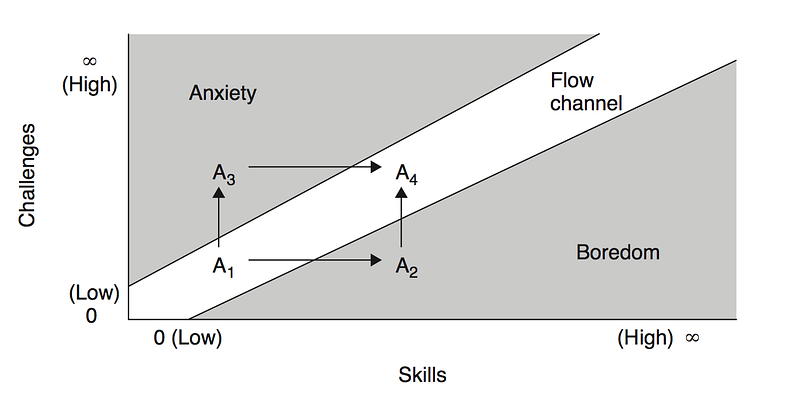
For that, we need look no further than in the fields of both education and gaming. One design philosophy that both game designers and teachers have is the concept of flow channels. In the gaming industry specifically, game designers know this as the graph that indicates the stage of difficulty versus the amount of experience the user has accrued. Too hard and players give up. Too easy and they tune out due to boredom.
Photo Credits to “The Art of Game Design” book by Jesse Schell
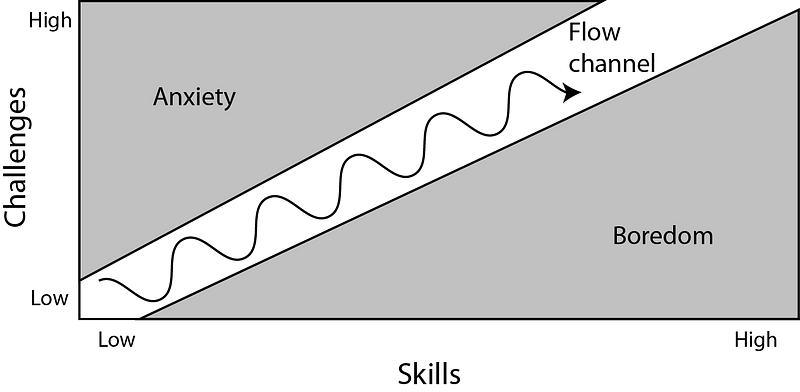
Likewise, no experienced high school teacher would start the school year with how to manipulate imaginary numbers: that would be too difficult and risk tuning students out with frustration. Yet they also can’t make the course too easy with simple arithmetic because that would just bore students instead. In the end, instructors and game designers want the material to start easy but get progressively harder in a constant and manageable pace. A successful curriculum, like a good game, would see the chart rendered into a wave function:
Photo Credits to “The Art of Game Design” book by Jesse Schell
Games and teachers have known about this design philosophy for decades due to their product’s necessity in maintaining audience interest, but this concept is critical for every single product: technical or not. It is easy to see how this applies to products with complicated UIs or complex professional functions. In fact, that is what sparked our century’s interest in design in the first place. But the lower end of the spectrum has been neglected and UX designers have taken things to the extreme. Instead of adopting a progressive difficulty curve and lowering the graph intercept, they’ve gone to the mindset of “simplify everything” with an endless horizontal line.

Complexity is not bad.

As long as it’s introduced subtly and in a gradual manner, it stands as a natural byproduct of knowledge and usage. Complexity when done right means more variety, more impact, and more depth. For a product, this means a greater value proposition and larger usability. For a user, this means a more powerful product.
The difficulty in accomplishing this is that it requires designers to create an artificial and progressive workflow process. By pushing users through a voluntary funnel, designers can naturally lead more curious users into exploring more creative uses by giving them the tools to do so. The process itself should naturally introduce features one by one, with each additional introduction bestowing the user new skills and abilities.
This is why designers need to rethink how they perceive their users. In addition to characterizing user personas as a niche with its specific demographic wants and needs, an additional consideration should be made for how that demographic learns.
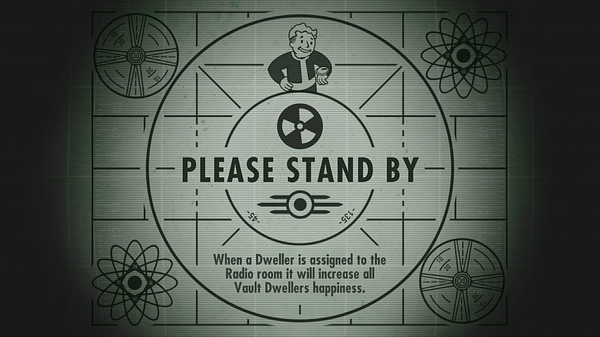
This tip is one of the only ways to max one of the game stats in play. It deserves a little more real estate than a loading screen. Photo Credits to DocPop.org
Currently, presenting tidbits and trivia is the most common method of products attempting to do this. Unfortunately, most of the time these efforts are either ignored by the user because they’re served on loading screens, or are reduced to bare factual details that grant no value. The loading screen is too short a process for introducing deep functionality. Even with the best attention-grabbing graphics, loading screen real estate is at most suited for event awareness or the simplest of game facts.
At this point, some of you might scratch your heads. The act of designing a funneling process seems incredibly difficult. If even such a popular game as Fallout Shelter cannot perfect it (though the rest of its channel flow is pretty well done), maybe it’s not the worth the trouble to consider: especially when the investment in design seems so mammoth and the goal so hard to measure even if done right. If my product is neither recreational nor educational, perhaps I can afford to proceed without this thinking… right?
Wrong.

Every Product is By Nature Educational

From the mere fact that every product must be used for the first time, each and every single product has to possess a way for the users to learn how to handle it. This by nature means that all products must be able to teach their users. For centuries, we achieved this through manuals. Even now, many things that we use still come with one: whether it be virtual or physical.
And that should not come as a surprise. Designers already know this and incorporate this into the UX through elements that build user discovery: constraints, signifiers, and other mechanisms like forcing functions. These are all great tools for what I think is the ultimate goal of depth and designing a channel flow: affordance discovery. At it’s simplest, affordance discovery is designing for users to find out how they can get new uses out of existing or new features. In context with a channel flow funnel, affordance discovery is the mechanism to subtly present new cases and usage to the user.

Clean Master

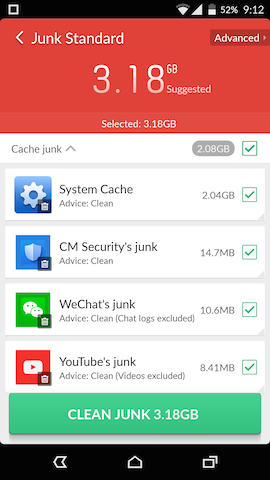
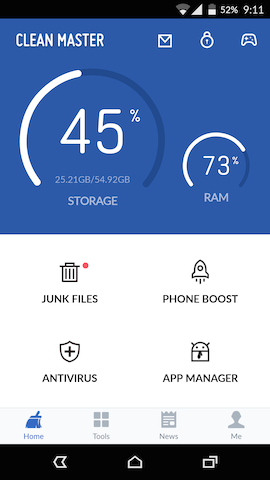
One great and simple example I found lie in the smartphone application Clean Master. Advertised specifically as a way to free up smartphone RAM, the application begins with a very simple UI that displays a headboard with some basic commands.
The ordinal procedure of the application goes from Left to Right. Application pictures courtesy of Clean Master.
Due to its marketing and name however, the user naturally just wants to use the application to remove the junk files. Easily enough, simple discovery and signifiers allow the user to find this functionality through the representation of the trashcan. A simple clicks brings us to the next step, in where the application provides appropriate feedback to the user but simplifies the necessary input to a very simple and direct “Clean Junk” call-to-action at the bottom.
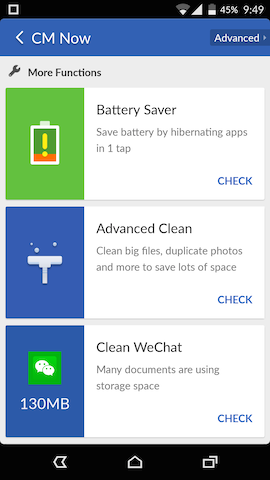
Where affordance discovery and the user design funnel begins is in the 3rd and last photo, where the user has already accomplished his main goal. At this stage, the user has already completed his desired action: but instead of returning to the initial starting page, he is led to one that displays some of the other functionalities of the application.
These additional functionalities are in-line with exactly the type of services that the user persona would find of interest. By displaying it after the application has already fulfilled the user’s initial goal, the presentation of the material in no way obstructs from the original purpose. Single-goal users will at this point end the application, satisfied that they’ve accomplished their desire. But those more curious will voluntarily continue and be led to discovering the application’s additional functionalities.
That is the goal of a channel flow funnel. It allows users with flat needs to complete their objective with no impedance, but also voluntarily gives those curious and wiling to learn additional functionality in a nonintrusive way. With each product being unique to itself however, the best methods of affordance discovery and their flow funnel will differ. In those times of design formation, ask the same questions as would a teacher or game designer: “How can I get them interested in the next step?”
Stay Smart, Stay Greedy.
Go to the profile of Jasper Cheng

Jasper Cheng

Geek. Carnivore. Startup Hustler. Growth Hacker. Interested in IoT, VR, AR, impactful play and gamification. Find out more at jtc.io

Apr 9, 2016

Your View on Salary is Holding You Back by Jasper Cheng

“You’re ridiculous”

That’s the response I’m greeted with as soon as I finished explaining how I calculated my salary to my father… And my sister… And my soon-to-be brother-in-law… And my friends. No matter their age, height, weight, or gender, each and every single one of them gave me the same response after I led them step-by-rational-step at how I was calculating my hourly wage. With a shake of the head and a heavy sigh, they would counter:
“You just can’t do it that way” — Just about everyone
But why not? My math wasn’t wrong. My logic was on-point. If anything, as self-described savers, they should by far prefer the methodology I was using instead of their own. It didn’t make sense to me. How could so many people, especially ones who have lived so frugally all their life, not see the validity in my method? Why would they stick with the outdated model they’re using now?
That’s when it hit me. What they had an issue with wasn’t the calculations or the numbers. It was the mentality. They just simply had a different look on life than I had.

A Quick Look at the Numbers

It’s natural for most people to calculate their work into an hourly rate. Whether for self improvement or plain curiosity, it’s something that most people do. After all, until gamification truly transforms the workplace, work is still work. And we need a reason to work.
The typical calculation goes something like this:
Say I make $45,000 a year. Assuming state and federal taxes add up to 33% of my total, that leaves me with $30,000. Let’s pretend I have 15 vacation days, which combined with 10 federal holidays, lets me take 5 weeks off of the year’s 52. So I work 47 weeks a year, 5 days a week, 8 hours a day, which adds up to a yearly total of 1880 hours and when divided into $30,000 leads to an hourly rate of $15.95. Simple.
My calculation goes a little more like this:
Work doesn’t exist in a vacuum. Pretend I have to pay $200/month for company health insurance, $150/month for transportation, and $150/month for the $7.5 lunch I get everyday at work. This equals out to $6000 that I subtract from the post-tax salary to get $24000. But I also spend time getting to and from work. In this case, its 3 hours round-trip, which I’ll tack onto the 8 hour workday. Instead of working 1880 hours a year then, I actually attribute 2585 hours to work every year. Dividing that into $24000, I yield $9.28/hr. This doesn’t include rent. It doesn’t include work clothes. It doesn’t include utilities or internet. No car, no renter’s insurance, no nothing.
The ideology is simple: Profit = Revenue — Costs

“You’re just being greedy”

Maybe. But am I not supposed to be? Why should I not include those other costs into my expenses? Those are all expenditures that I have to incur in order to work, which means that I neither get to use nor benefit from that sum. Of course you require a place to stay and a lunch to eat even if you don’t have a job, but without one, you could live with your parents back home and make your own sandwich.
The real point of this method of calculation is to see what is your real benefit and growth per hour. It is to crystallize the trade-offs that you’re actively and unwittingly taking as a cost of the job. It is realizing that every hour behind a desk plugging in data is an hour away from a book, from learning a new skill, or from creating your own product. In a very real sense, it is the only true way of finding your “take home pay” by painstakingly finding out your “to work costs.”
Photo Credits to Pexels.com
Some people call this “Pay-Price to Action.” Economists call it “Opportunity Cost.” I myself prefer calling it “Cost-Focused Investing,” since I use it to make decisions on what gives me the best returns on personal development. Whatever term you use however, the basic premise is the same: there are consequences for your choices, and both what you do and do not do will still cost you. For entrepreneurs specifically, these must considered when postponing that launch day to “get more experience as an employee first” or saving up “just a little longer.” Even for a non-entrepreneur, these are trade-offs to balance before “taking that job in the big city” or going to college instead of working.
The unfortunate thing about consequences is that they will happen and affect you with or without your permission. The goal of Cost-Focused Investing is to emphasize and discover these consequences so that you can at a minimum choose which ones you are willing to take and make an informed decision based off of that. In addition to being able to truly see what it is that you’re gaining from your current circumstance, this mentality allows you to be more aware and conscious of what you’re worth and where your priorities lie. Humans are a sad and funny thing. Only by seeing what we stand to lose do we reevaluate and hold on tightly.
Seasoned entrepreneurs know this. They know that their most valuable resource is not money. That can be raised. It is not ideas. Those are a dime a dozen. It is time, because it is limited in quantity but unlimited in potential. But rather than being idealistic and attaching some sort of feel-good value to our time, we have to be realistic and ground it in cold reality. If a $70/hourly wage was what held you back from your goals, does that still stand if you realize after all expenses it’s actually $45? How about $13? It’s thinking like this that allows a world-traveling freelance developer to make 2/3 the average salary of those in Silicon valley and still enjoy a quality of life much higher than that of his Californian counterpart.
If someone accepts a minimum wage salary, only to do the math and finds out that it ends up as a net gain of $.50/hr, is that really worth the time and effort? They’d probably be more productive learning to code or another skill. But this only assumes that the job offers no intangible benefits. Though much harder than dealing with a raw number, Cost-Focused Investing has to take into these benefits as well in the individual’s personal growth. For example, how much is the experience from the job worth? What about a letter of recommendation or a network? Most importantly, how will it help me in the trajectory of which I have planned for my future?

What This Means for Employers

I have no ill feelings towards employers. This post is not meant to go into the entire pay debate and advocate for higher wages and salaries(though if you’re offering, I would never be so rude as to refuse!). In fact having employed some developers briefly during my stint in entrepreneurship, I can empathize with employers not sharing the same perspective. To them, they are only really getting those 8 hours. They don’t benefit directly from your time commuting or your choice of lunch, and since they can’t find out what are the exact costs each person has, they cannot compensate or even systematically address it.
Yet that’s why there’s such large misfit between employers and employees. Whether the person knows it or not, every single human being is an entrepreneur. Though they might not have an official business, they are all constantly investing and developing a product: themselves. As we inch towards the future of employment, we see that the companies that do best are the ones that realize this and put in mechanisms to invest in their employees. This is because employers should share the same view as their employees. Not only because it builds a very real sense of being on the same team, but because fostering growth in workers leads to better products and greater culture.
All this has to start organically from employees themselves. Unless employees universally adopt a Cost-Focused Growth mentality, they will consistently continue to undervalue themselves and miss out on opportunities to grow both for themselves and their employers. Employers are profit-minded, and it is up to employees to convince them that it is in their best interests to spend more in order to make more. Companies that rely on cream-of-the-crop hires to stay relevant and innovate like Google know this, which is why they offer not just aesthetic benefits like free lunch and massages, but also programs to allow each person to dedicate themselves to a personal project.
Smart employees know that time is precious. They know how to count costs and plan for growth. For a good company that wants to become great by hiring smart employees then, they need to reflect that mentality and incorporate ways for these workers to save time, encourage worker development on-the-job, and properly compensate them for their costs to work.

P.S: A Final Note about Talia Jane

With the social sphere buzz surrounding her Yelp post just starting to die down, it’s important to address how this mentality can serve as a major lesson for millennials just entering the workforce. New recruits are often stuck in the trap of nominal profit, forgetting to account for costs due to a lack of planning, options, or just plain experience.
Talia’s case is just one of many that are happening as more millennials graduate and find jobs. For Talia herself, she could have been more discerning in her choice of apartment, city, and job. If she had been more cost-focused, it would have occurred to her that after expenditures she would be left with nothing in growth. She could have realized and pursued another career path, perhaps one that would drive her closer to the childhood goals she set for herself.
Yet even though Tali definitely shares some of the blame for overlooking her costs and putting herself in such a position, companies should also be more understanding and thorough in their recruitment. Good recruitment remembers that it is not just enough to see whether or not the applicant is a good fit for the position, but whether or not the position is a good fit for the applicant. Resources can also be given to make sure that employees can acclimate to life on-the-job; Something as simple and free as a company housing page can dramatically reduce an employee’s troubles while also reducing workforce churn.
Stay Smart, Stay Greedy.
Go to the profile of Jasper Cheng

Jasper Cheng

Geek. Carnivore. Startup Hustler. Growth Hacker. Interested in IoT, VR, AR, impactful play and gamification. Find out more at jtc.io

Mar 31, 2016

Here are the Top Tech Companies’ Secrets to Hiring the Best People by Sarah Cooper

Google, Facebook, Apple, Amazon, Google, Amazon. These top tech companies each receive over a quadrillion resumes per year (source needed). So it’s safe to say they have a good process for choosing the best job candidates. But what is it?
No, it’s not that list of popular Google interview questions you Googled on Google. In fact, their finely tuned hiring process goes way beyond rudimentary queries on algorithms and quantum physics.
If you, too, want to hire the world’s best top tech talent, try one of these secret hiring strategies.

1. Begin phone screens 15 minutes early, 15 minutes late, or not at all

WHY? To find people who are always ready for the job

Anyone can answer a series of probing questions when you call them at the expected time. But what happens if you call them when they’re still sleeping, in Zumba class, or on the toilet? This is how the top tech companies find people who are ready for the job at any moment.

2. Make the interview schedule as confusing and unpredictable as possible

WHY? To find people who don’t need instructions

Make sure that neither the interviewers or interviewees have any idea what’s going to happen during the interview. This is a great indicator of who will perform best when no one has any clue what’s going on.

3. Make sure something goes wrong during the presentation

WHY? To see how the candidate adjusts to less-than-ideal circumstances

Purposely set up the candidate’s presentation in a room where the equipment doesn’t work, which is probably any room. If the candidate is able to roll with it and doesn’t mind adjusting, then that’s a good sign she’d be easy to work with. Bonus points are given for candidates who have a Plan B, Plan C and Plan D, which comes in very handy in the tech world.

4. During the interview, make a ton of incorrect assumptions

WHY? To weed out candidates who are easily annoyed

If the candidate’s last job was at Twitter, say, “How long were you at Yahoo!?” Take note of the candidate’s tone when he corrects you. Is he a jerk about it or does he stay cool? This is how tech companies find out what a candidate would be like to work with when the shit inevitably hits the fan.

5. Ask the candidate to solve your own, specific problems

WHY? Because you really need help with this problem

Tech companies often have candidates solve real problems they are currently facing. This is a good way to get some free help with those problems.

6. Have the interview frequently move between different rooms

WHY? To find people who are still excited, even when they’re uncomfortable

Never let your job applicants get comfortable during the interview. This is how you find people who are uncomfortably excited and also get around the fact that no conference rooms were available for the entire day.

7. Ask the same questions over and over and over again

WHY? To test consistency

In the tech world, predictability is a good thing. During the interview, don’t worry about asking the same question over and over again because you keep blanking out. This is a great tool for testing the candidate’s consistency. Candidates should only be wildly inconsistent with their answers when interviewing for senior roles.

8. Conduct dual interviews with a good cop / bad cop vibe

WHY? To find people who can multi-task under pressure

Put the candidate in the middle of a conference room with interviewers at both ends of the table. Is the candidate able to simultaneously direct her attention to both interviewers while sufficiently answering each question at the same time? Or is she clearly exhausted and wondering why she even agreed to this interview? This is a great indicator of how the candidate will perform during a crunch.

9. Ask a question, then start typing very loudly

WHY? To find people who remain focused despite distractions

Ask the candidate a question. Then, as soon as he starts to answer, start typing loudly. Apologize and say you’re “listening, just taking notes.” You could be taking notes, or you could be writing an email to your estranged father, doesn’t matter. See if the candidate can remain focused on the question or if he gets lost. This will help you find candidates who don’t let tiny distractions get in the way of finishing the job.

10. 3 months later, call and offer the candidate a job she didn’t apply for

WHY? To find people who are determined

This is a great way to weed out people who obviously didn’t really want the job in the first place. Does the candidate fight for the job he wanted? Does he take the offer because he thinks it’s the best he can get? Or does he turn it down because he already found another job months ago? This tactic is a good way to suss that out.
Go to the profile of Sarah Cooper

Sarah Cooper

Former Googler / Writer & Comedian / Author of upcoming book, 100 Tricks to Appear Smart in Meetings (October 2016)

Mar 28, 2016

Thoughts on building weatherproof companies by Lars Dalgaard


The best founder/CEOs want to build long-lasting, strong companies. But this isn’t just a want, it’s necessary— especially today as companies stay private longer.

CEOs who expect their companies to be acquired as a “quick exit” aren’t going to have it easy. It’s especially hard for those CEOs and advisors who never had to learn how to build a full-fledged, well-governed company — with sustainable sales, marketing, HR, legal, customer support, accounting, and finance — without losing their sense of urgency. They “simply” needed to build a winning product, merge with a larger company, and then let others take care of the rest.

This is both tough and good news for today’s founders/CEOs.

The good news: You have a bigger opportunity than ever before to build a long-lasting, fundamentally important technology company.

The tough news: To do so, you must grow — personally and professionally — to a higher level than you might have experienced in your life before. Doing so means committing to building a company that can go “all the way” on its own.

Below, I share some things I learned on my own journey here. When I ran SuccessFactors, we used to say “we’re building the company like Lambeau Field” (Lambeau Field stadium in Green Bay, Wisconsin, is the home field of the NFL Green Bay Packers, who under their coach Vince Lombardi were known for their winning streak and ability to grab crucial wins even in the worst snow, because their team was built to handle tough weather conditions).

When you are building for long term — as opposed to a quick exit — it becomes obvious very quickly that you’ll have to make very different decisions, on every level from hiring and culture to how you treat sales and customers. You need to test every decision that’s obviously meant for immediate results with “will it also strengthen us in the long term?”

Successful companies are bought, not sold
Even if your company does end up getting acquired, building your company well is the best you can do for the price you get. When we negotiated selling SuccessFactors for 11X revenues (which at the time was the highest multiple on sales in a decade), if we didn’t like where the value or discussions were going, we knew we could just stop negotiations and keep on building the company. And we weren’t bluffing, which you cannot fake. Because good companies are bought … not sold.

Just as a dog can smell fear, any experienced M&A team can smell a mile off if you want to sell your company, and consequently the price goes down. If you are not selling, and you have the power to stay independent because you are well-built and can handle “bad weather”, you can hold out longer than the acquirer, and the price of your company goes up to what you know it’s worth.

So how do you build such scale, without shortcuts? To start, there are at least five areas I believe a founder must focus on:
Learn how to learn fast
Build a culture that will sustain the company through good times and bad
Build a real board of directors … and use it
Build the right meeting cadence
Kill the monsters of the mind

1. Learn how to learn fast

The faster your company grows, the faster you are faced with not knowing what to do as CEO. And it doesn’t get any easier with time: The challenges just become bigger, and keep coming. Since many founders with the biggest ideas have little experience building large companies, here are some thoughts on what to do.

Develop a perpetual, aggressively help-seeking mindset
This isn’t just some self-help cliché. This is about waking up every day and asking yourself: “What don’t I know, and who can teach it to me?” And then finding an advisor, board member, executive, employee, coach, customer, or anyone else who has the knowledge you need. This sounds obvious and easy to do, but most founders shy away from it because it makes them feel insecure.

When you’ve been good at everything your whole life — and in fact part of the drive behind starting your own company means wanting to do things in your worldview — asking for help does not come naturally. But you must put your fears and ego aside if you hope to learn quickly. Learning as-you-go, at regular speed, will cost you and the company.

Know that you can’t run your large company the way you ran your small company

It’s not as fun as running a small 10-person company — where everyone fits into a single kitchen and knows what everyone else is working on — as it is to run a 1,000-person company.

Running a company of scale is so foreign and alienating at first, which is why it’s worth focusing on head on. And it can be fun in different ways; there are many amazing things you get to do at the 1,000-level company you could never do at the smaller level. But there are many boring yet extremely necessary elements to getting to that rewarding place. Accepting and not fighting the fact that you must embrace the systems, people, and processes required to run your large organization is one huge step. Especially because that’s one the ways of getting 1,000 people on the same page, motivating them, behaving with integrity, and getting results.

The worst thing you can do is to run a big company as if it were a small company — it might feel nice and nostalgic in your head, but in reality it turns what seems fun into something miserable for everyone in every part of the business.

Share and solicit constant, systemic, unequivocal feedback
One of the most counterintuitive things I learned from Jack Welch, my advisor and confidant when I was building my own CEO skills at SuccessFactors, was around performance management. He said HR was the most important role in the company, because unlike the CEO who was looking backwards, the strong VP of HR got to look forward! Jack’s best line was that someone getting fired should never be a surprise to you or them.

An organization that scales is an organization that learns. And creating a world-class learning organization means putting in a communication framework that allows managers and employees to give each other clear feedback (whether in person or distributed workforce) on where they’re killing it, where they need to improve, and how they need to develop. Not only do you owe it to people, it’s worth the time and effort because then the company can scale beyond simply getting along with each other. True, it’s often a pain — there are other things you’d rather be doing, plus those conversations aren’t easy — but luckily there are plenty of online web systems that have been developed to take the pain out. Those systems also yield powerful data that can be used for reshaping the org chart, succession planning, and compensation. This is some of the most interesting “big data” you can spawn as an organization; your management meetings will be significantly more informed and productive if that data is analyzed well and acted upon.

By the way: the CEO should do this feedback process with the board too.

Invest in a coach

In addition to the board and other advisors, an executive/leadership coach provides a quasi-formal yet safe place for the CEO to go to confidentially discuss challenges, confusions, or doubts. Though paid for by the company, the coach has no “formal” role and reporting relationship. The formality behind it is to reinforce regular and consistent meetings (just like board meetings), where the CEO gets another pillar to lean up against as well as an independent perspective on their own performance.

For instance, a coach will often begin by conducting a 360 review of you with anonymous participation of the board and direct reports. This typically becomes a great catalyst for personal and professional growth that can help you take things to the next level. This is why we suggest all CEOs take on a coach early. Some say it’s even a form of “work” therapy. (If you just laughed scornfully at that, then you should find one immediately — you need it more than anyone.) Of all the coaches I have introduced, not one has ever been fired and in fact are loved by their CEOs.

Hire the domain expertise that you need fast (before it’s too late)

Most technical founders don’t know as much about sales, marketing, legal, finance, human resources, and other critical company functions. And while smart enough to learn, they absolutely do not have the time to do so. Learning all those functions yourself would mean a competitor would overtake you, or you would lose the company. The time required to bring executive hires up to speed, if they have the right attitude, is far outweighed by the immediate impact they can have in leadership, structure, insights, clock-speed, experience, and ability to grow the functions that together make up — and scale — the company.

So whether you’re a technical founder or not, you must build a world-class executive team. Because this means bringing in people who know how to do what you do not, you will likely feel fear, which will be exacerbated by your co-founders and early hires sharing concerns that those new hires “aren’t a cultural fit” and so on. Especially since none of you have the intimacy with these people that you have with each other. This is partly true: Some will be a cultural fit and others won’t directly be, but either way it’s a good thing to drive diversity this way.

Part of the issue is control. Most founder CEOs want total control, because that’s how they got to where they are in the first place, and they have a super high standard for themselves and the quality of the work they want done. They are not sure that if they give control to others, it will get done to their values and standards; the thinking goes, “Then I’d rather have done it myself in the first place”. I understand that — and believe there are many great things that come from that instinct — but you cannot build a lasting company without help and without giving up some of the power. So you need to make a choice.

Don’t just promote from within: Get beyond your fear of hiring different people

Another big emotional block I dealt with in my startup was the idea that we were only true to our disruptive roots and soul as a company if we promoted from within, because the early people are the “real” people with the real “edge”. The corollary of this was “all these new people with their big resumes don’t understand our company and its culture”. Had I hired big resumes that failed spectacularly? Oh yes. But I also had early employees that destroyed value, and stayed in the role way too long. Sometimes so badly that 10x engineers left because they didn’t respect the leader.

The problem is three-fold:

First, how can you know what to hire when you haven’t ever seen what the best in class for that role actually looks like? The best way is to meet a lot of candidates, build a framework, and test it quickly.

Second, most of the big-resume people who failed simply were not integrated well enough. There’s no excuse for that, you need to take the time to let the organization absorb the new transplant. Obviously, some just don’t work and then you need to take action swiftly.

Third, don’t hire for “look and feel”. Make up your mind about what you actually need and hire that person, which is often not the person with the amazing resume from the amazing company with the amazing education. If you do find a fire-breather that gets your company and has some great experience, then ask yourself what’s holding you back beyond fear. In most cases it’s fear of change.

The idea that you need to target a certain age, certain culture, certain schools, and certain background is totally broken to me; it’s a commitment to non diversity. You need to be all-in on getting the best combination of raw brain power, work ethic, and willingness to fight for your mission — and that also includes finding and hiring for true domain expertise.

2. Build a culture that will sustain the company through good times and bad

A company’s culture comes from the CEO. It cannot be delegated, but it also cannot be ignored.
Culture is the most important thing you do as CEO. If it’s not what you truly believe and want your company to be, your employees will never adopt it. If you do not define how your company does business, how its people behave, how you treat each other and your customers, it will be defined for you. The problem with that approach is that a “crowdsourced”, unmanaged culture has a way of drifting to the lowest common denominator.

You need to defend culture as rigorously as you defend your marketshare and the product experience. As AirBNB CEO and co-founder Brian Chesky describes here, a “fucked up” culture doesn’t have to be inevitable when you get to a certain size. You don’t just have to defend it… you can build it. Especially if you define — and operationalize — culture as Chesky does: “a shared way of doing something with passion”.

Deciding on meaningful and easy-to-relate to values — especially “NO assholes”

It seems so cheezy to write values down. It’s not. It’s an exercise that requires clarity and discipline. The funniest challenge I get when pushing for writing down values and putting them up on the wall is the comment “no one read the values in my last company, they sucked and it was such a joke”.

Well hell, then don’t write down values people don’t care about and don’t remember. If you can’t remember or recite those values yourself, then you need to go back to work. If the values you wrote feel too corporate-ese and not connected, that’s your fault, go back to work on them again, and write them in plain language. You can have some fun with the values, but they must resonate, and it’s serious business.

At SuccessFactors our first value was “Respect for the Individual, No Assholes”. But as we grew bigger, some of our customers were the largest companies in the world, and they felt insulted by this language. So out of respect to those customers’ voices we changed “assholes” to “jerks” (as described in this case story by Stanford professor Bob Sutton).

The values are not just essential for the organization and every new hire, many times in tough situations I would look to our values — distilled here by one of our VPs of HR — for guidance. They withstood the test of time.

Example values

Although the culture must come from you, here are a few examples I found useful in building Success Factors…

Kaizen or continual improvement

How can you fix what’s wrong if you don’t know what’s wrong? So make hearing and sharing bad news — something which seems painful at first — a wonderful and rewarded thing. Every company has something wrong and every time someone shares that something broken, the company gets just a little bit better. Borrowing from the continual improvement concept most famously used by Toyota, we called this process a “kaizen!”

It becomes stunningly disarming to give this perpetual pursuit of perfection a name: No matter how hard our colleagues had worked, or how well we had done, we always were able to say “what’s the kaizen moment here?” so no one would have their feelings hurt when we sought a better way. It allowed us to be excited about being better always, and at every single moment in the company do more for customers and stand out in the marketplace.

To this day, I believe that cultural value is one of the reasons SuccessFactors outperformed its competitors and most tech stocks as a public company.

Gratitude and respect

A company that is truly grateful to the people in all of the constituencies it works with — investors, customers, partners, each other — will almost always be a great company and a great place to work. Honestly, with the things people achieve in disruptive tech companies, it shouldn’t be hard to find real things to thank people for. Teach your company to value and respect the people that you work with.

Along these lines, it’s clearly important to respect customers too. Everyone knows intellectually that if their customers don’t succeed, their business will fail. But have they really put that into practice as part of their culture? There’s a lot of literature out there about putting your employees first (the way Southwest Airlines did), as a way to take care of your customers. But which comes first? I think it’s an irrelevant debate. The key is that customer and employees are at the heart of everything, and without treating both with accountability and care, you can forget about building a great, lasting company.

Humanity and humility — build trust by daring to show you’re human

My biggest learning in business is around daring to be human. Basically, how powerful it is to revealing your personal vulnerabilities, work on them openly, and connect with your colleagues in a real way. This article shares my stories and views here well.

What I would add is this: Always remember that the purpose of your company is to serve others, not your ego. If you need some conviction on this point, it’s like a friend of mine (who was a world champion in taekwondo) said, “I can promise you that no matter how good and successful you are, there’s always someone who can come kick your ass”.

While the business leaders I admire today are confident in their personal convictions and do things that defy the norms — and I condone that individuality and freedom — most of them have a humility about their success and the role they play in the greater world.
3. Build a real board of directors … and use it

Most entrepreneurs by definition want to do things in new ways, and so it’s easy to think of your board as a necessary bureaucratic evil. In reality, your board is your last line of defense between you and self-delusion, bankruptcy, and perhaps even jail. The bigger you get, the more likely that a weak board will let you cross those lines. So, build a real board of directors. Here are some ways to do that.

Expand the board early

It’s very comfortable to keep your startup small. Typical boards consist simply of venture capitalists and the founders. This is a bad idea. Going back to my earlier point about learning fast, one of the best ways to learn fast is to put people who you can learn from on your board. I recently hosted a panel with three very different CEOs in very different industries, all of them with recent $1B + sales of their companies, and each of them had added non-VC directors in their first, second, and third years of building the business. I highly recommend it. Some VCs don’t like it, but you have to expand the board early, and carefully.

Your criteria should be people who really care about the company and want to help the CEO and company, yet are 100% independent as well. Aim for 1–2 outside directors early in a company’s life, before it reaches $10M, and then 3–4 outside directors when you’re above $10M in sales. In my own case, my criteria for getting outside directors was that I did not know them personally or from prior business. Some later became friends, but none were when they started on the board.

Besides expanding the CEO’s horizons and challenging everyone else (the “insiders”) on the board, these “outside” directors can show the company new strategic angles. Many companies wait until the company is ready to go public and end up rushing it then because it is required to have outside directors on several committees. At SuccessFactors, the board made us a lot more professional, and helped us put a lot of the necessary structure and controls in place. But more than that, they helped raise the bar, contributed very different views that were helpful, and provided input that inspired some of the most important things we did.

Have discipline around board meetings

It’s a red flag for me when a CEO asks if the board can move the date of the board meeting until results are better.

I don’t recommend anyone ever cancel the board meeting for any reason, except personal emergencies. In any size company, the board meetings always become a forcing function for the CEO and management to take a much-needed snapshot of the business and get real as to the status of the company. It’s not just a test though — the board can help you think about and help figure out the biggest challenges you have, confidentially.

Have real board meetings by having real data

The metrics and data for board meetings begins with the financials: revenue, growth, gross margins, profits, etc. The data must be presented honestly with year-over-year comparisons and performance against plan. One of the biggest mistakes CEOs can make is constantly changing this data as the business changes — which is fine — but doing so without showing continuity over time — which isn’t fine — including why those changes happened. This is the only way a board can help keep things “real”.

The data will also be 20X more productive if sent out at least three days before the board meeting. That’s always a challenge because the business changes down to the last minute, but the value of having the board members have these materials in advance far outweighs the last minute changes.

Finally, beyond the financial data, you should discuss culture development and voluntary and involuntary churn of people, by function, gender, geography, etc. The longer the period you use as benchmarks and trendlines, the more insights everyone can give on what’s happening to the business.

This becomes extra important when you add multiple business lines and multiple geographies. SuccessFactors’ products were used in over 120 countries, and looking at how sales developed over time comparatively gave us great insights in how attractive the markets were.

Give the board more than just your filter and version of things

You should make sure that each major function presents a deep-dive of their area to the board at least once a year.

Not only is it important for the board to see and “feel” the quality of the team you spend most of your time with, but they can help evaluate and share where they see strengths, weaknesses, and opportunities. True, they will never know a fraction of what you will, but they can give you good insights you were too occupied or too close to observe.

Closed board sessions with and without the CEO

When I first experienced two different closed sessions — one without the management team, and one without the CEO — I was a bit shocked at how helpful and revealing they were. In the former, it’s a much safer environment for the board to ask you about your team, and for you to ask them how the board meeting went. The latter, meanwhile, gives the board confidence in you, the ability to talk freely without worrying about hurting anyone’s feelings, and a chance to speak up without worrying about the CEO’s interpretation.

All of this helps ensure a board dynamic that is open, honest, and deals with the real issues of the business.

4. Build the right meeting cadence

Meetings suck. I’m the first one to say that while big companies are in meetings your competition is out in the field kicking your ass. Plenty has been written about killing meeting culture. Much of that is useful — there’s no need for unnecessary meetings — but I’m here to tell you that you should embrace them too. Especially regular meetings with key stakeholders who will help your company scale, all the way from the board to the customers.

1:1s with board members

Guess what: you can meet your board members outside of board meetings! But I don’t believe in meeting them beforehand to “presell”, “warn”, or “get them on the same page” (except for some particularly sensitive topics that could derail the board meeting). So why have a board meeting if you’ve already had it?

If you have found the right board members, you will want to update them on the business and let them challenge you. This will not only make you sharper and able to call out your own bullshit, it will help you course-correct faster if you’re heading down a tricky or sticky path.

Management meetings

Management meetings can feel frustrating when all you want to do is just be out there building or selling the product and otherwise helping the company get ahead.

So instead of having “update” meetings, make them about topics that are critical to the company’s survival or focused on fixing the bad news from kaizen sessions. You will also find that your leaders can never get enough of hearing your latest musings and perspectives on the company’s trajectory and issues. They feel connected and will disseminate the message effectively to their team members.

At SuccessFactors, we would start management meetings by reviewing our core aggregate target metrics, by exception. Then, I made the meetings mostly about customer success, renewals, and net promoter scores because to me, those provided the most concrete lens from which everything else emanated: product issues, market disruption, sales challenges, morale, and more.

1:1s with direct reports and skip level management: Two ears, one mouth!

More than anything, this one seems bureaucratic and time consuming, because “I meet them all the time anyway and discuss important things”. But it’s not about you — it’s as much, if not more, about them. The saying “people are born with two ears and one mouth” comes to mind here because the best managers I know spend most of the time with their direct reports in 1:1s asking them what they think and listening to their issues, instead of talking at them.

On another note, telling your direct reports that you want to spend time with their leaders alone is a very powerful insight on your ability to run the business well. In an open, honest culture, your executives should be proud to have you talk directly with their team. And if they have done a great job building their function, their direct reports will often talk about them effusively and supportively.

Regular interactions with customers

A culture is as much about its customers as it is about its employees. And in the decade+ since I incorporated and led SuccessFactors, the most powerful and surprising data came from meeting face-to-face with customers.
Even if you’re on top in the Gartner Quadrant (as we were for ability to execute and product strength), your customers will give you insights as fresh as cutting a hole in the ice and jumping in. But only if you ask them honest questions to genuinely hear and learn from them. I never got tired of hearing those insights, which made us stronger. And having built the culture to deal with it openly, the rest of the company eagerly awaited honest feedback of where we needed to grow from anyone returning from the customers. We saw it as the gift that it is.

5. Kill the monsters of the mind, while preserving your spirit

If you are lucky enough to have identified an idea to massively disrupt a market, you got here by believing what no one else believed, and by taking chances no one else dared. So why stop? Because it can cost you and your company. I would never want to kill off that will-to-power or the strength of an entrepreneur’s own convictions. But here are some things to look out for so your mind is not your own worst enemy and so both you and your company can realize your full potential.

Don’t lie to yourself

It’s easy to construct a beautiful narrative about how great the company is, because you know the company better than anyone. But just because you know the company the best doesn’t mean that you aren’t lying to yourself. A significant sign to watch out for is when you saw something work for a while, but there’s now lots of evidence that it’s broken.

Since no alternate paths have been found yet, and any paths you think of seem daunting, “the monsters of the mind” often make people hold off on immediately cutting their losses and forging a new path. This can happen in any part of the company, from product to sales.

To keep yourself honest, use your metrics, KPIs, projections, and results to conduct frequent reality checks. If a founder often changes what he or she wants to measure, it’s typically because they haven’t figured out what the real problem is. There are exceptions, however: It could be that the business really has changed and the old KPIs are irrelevant. But that doesn’t happen too often for a successful company, and most key metrics like new late-stage pipeline generation, customer adoption, median deal size, true win-loss, net new sales growth, and so on never get too old to track historically and against plan. Data is one of the best tells.

Remember, the winner’s mindset is a catch-22

Here’s the thing: The very “will to power” qualities that make successful entrepreneurs — being obstinate, willing to defy the norms, believing the impossible, doing what no one could imagine being done, and trusting your vision over what already works for all of the incumbent “experts” — is what got you to success in the beginning. It’s how you got your company shot out of the cannon; got it its first media coverage; and got attention from press, venture capitalists, and hot recruits.

So I would never say you should stop trusting your instincts. In fact, just when most CEOs wonder about their instincts as they’re scaling is when they should trust them. But… you cannot build a Lambeau Field-weatherproof company if you don’t also learn to constantly gather challenges to your thinking, learn to listen and hear them, and then test those learnings out.

The companies that you respect the most on the outside have gotten there by constantly ripping up their own ideas and stress-testing them for relevance — whether it’s Apple or Amazon, Disney or Pixar, Google or Facebook. It took building a lot of infrastructure and process while also carefully preserving the entrepreneurial spirit and mission behind the company in the first place.

If there’s only one thing people reading this post should take away, it’s that the very mindset that drives success can backfire if you don’t do this hard work. There are no shortcuts.

Labels

Giveaway ( 3088 ) Excerpt ( 1336 ) blog tour ( 942 ) Book Blitz ( 864 ) Cover Reveal ( 543 ) Guest post ( 518 ) Teaser ( 347 ) Book blast ( 283 ) Interview ( 260 ) Culture ( 245 ) Books ( 242 ) Trailer ( 228 ) freebie ( 227 ) Art ( 226 ) Funny ( 225 ) History ( 219 ) Promotion ( 207 ) Science ( 202 ) Articles ( 181 ) free kindle ( 145 ) Literature ( 142 ) Release Day ( 131 ) Review ( 120 ) Photography ( 115 ) nature ( 113 ) kindle ( 112 ) Gender ( 105 ) Book tour ( 90 ) Authors ( 89 ) myth ( 77 ) new release ( 77 ) Coffee ( 76 ) newsletter ( 71 ) Children ( 70 ) Music ( 66 ) box set ( 60 ) Archaeological ( 59 ) illustration ( 56 ) food ( 50 ) spotlight ( 50 ) PLAYLIST ( 49 ) social ( 48 ) 0.99 sale ( 46 ) YA ( 45 ) contest ( 43 ) fantasy ( 43 ) Mythology ( 42 ) Grand Finale ( 41 ) sale ( 39 ) blog hop ( 37 ) words ( 37 ) Poetry ( 35 ) artist ( 34 ) Characters interviews ( 32 ) Game ( 32 ) syfy ( 32 ) language ( 30 ) quotes ( 30 ) recipe ( 30 ) Release Party ( 29 ) Expert ( 27 ) ads ( 21 ) mystery ( 21 ) Photos ( 20 ) reading ( 20 ) Romance ( 19 ) Animals ( 18 ) Design ( 18 ) Education ( 18 ) Street Photography ( 18 ) book highlight ( 18 ) facts ( 18 ) comics ( 17 ) health ( 17 ) writing ( 17 ) Folklore ( 16 ) Holidays ( 16 ) Movies ( 16 ) poem ( 15 ) Biology ( 13 ) top 10 ( 13 ) Book release ( 12 ) Maps ( 12 ) covers ( 12 ) Book trailers ( 11 ) Cash Giveaway ( 11 ) Giveaways ( 11 ) Twitter Blast ( 11 ) Valentine ( 11 ) Friday revel ( 10 ) Libraries ( 10 ) Paranormal ( 10 ) Release blitz ( 10 ) agriculture ( 10 ) events ( 10 ) sport ( 10 ) Characters cast ( 9 ) Publishing ( 9 ) Sneak Peek ( 9 ) dream cast ( 9 ) work ( 9 ) BOOK SIGNING ( 8 ) Steam-punk ( 8 ) astronomy ( 8 ) interviews ( 8 ) plants ( 8 ) technology ( 8 ) Free Book ( 7 ) Halloween ( 7 ) NA ( 7 ) Thanks Giving ( 7 ) blog ( 7 ) blog blast ( 7 ) economy ( 7 ) letters ( 7 ) street art ( 7 ) Christmas ( 6 ) Contemporary Romance ( 6 ) Genetic ( 6 ) Goodreads giveaway ( 6 ) This and That ( 6 ) YA RELEASES ( 6 ) news ( 6 ) short story ( 6 ) writing tools ( 6 ) Amazon. ( 5 ) Audio ( 5 ) Philosophy ( 5 ) Spring ( 5 ) YA Fantasy ( 5 ) hosting ( 5 ) jobs ( 5 ) mother day ( 5 ) top 5 ( 5 ) Black Friday ( 4 ) BookRave ( 4 ) Fun Facts ( 4 ) Grammar ( 4 ) Song ( 4 ) Sunday Read Recommendation ( 4 ) Weather ( 4 ) Web ( 4 ) cakes ( 4 ) deals ( 4 ) evolution ( 4 ) gift card ( 4 ) horror ( 4 ) lol ( 4 ) photographer ( 4 ) soundtrack ( 4 ) studies ( 4 ) video ( 4 ) Architecture ( 3 ) Book Swapping ( 3 ) Book tor ( 3 ) Cartoon ( 3 ) Characters ( 3 ) Computing ( 3 ) Dance ( 3 ) Easter ( 3 ) Erotica ( 3 ) Indian ( 3 ) Kindle Fire HDx Giveaway ( 3 ) St. Patrick's day ( 3 ) Suspense ( 3 ) TV series ( 3 ) Thriller ( 3 ) Translation ( 3 ) bookstore ( 3 ) chapters ( 3 ) chemistry ( 3 ) contemporary ( 3 ) ecology ( 3 ) fall ( 3 ) film director ( 3 ) guest review ( 3 ) hope ( 3 ) icon ( 3 ) launch day ( 3 ) math ( 3 ) story ( 3 ) summer ( 3 ) syfi ( 3 ) urban ( 3 ) winter ( 3 ) 10 Fun Facts ( 2 ) 10 things ( 2 ) 4th of july ( 2 ) Adventure ( 2 ) Audiobook ( 2 ) Awards ( 2 ) Blogger Appreciation ( 2 ) Book reveling ( 2 ) Bookstores ( 2 ) Characters bio ( 2 ) Clean Sweep ( 2 ) Cover wars ( 2 ) Crime ( 2 ) Debut Author Challenge ( 2 ) Dystopian ( 2 ) Family ( 2 ) Free Shipping ( 2 ) Fun ( 2 ) Gifts ( 2 ) Graphs. STAT ( 2 ) Hop International ( 2 ) Introduction ( 2 ) Literature awards ( 2 ) Nostalgic ( 2 ) Ocean ( 2 ) Psychological ( 2 ) Psychological Thriller ( 2 ) Reading Contest ( 2 ) Release week ( 2 ) Selfies ( 2 ) Summer Reading ( 2 ) Summery of the year ( 2 ) Tablets ( 2 ) Tea ( 2 ) Titles ( 2 ) add ( 2 ) art Articles ( 2 ) birds ( 2 ) book bash ( 2 ) book contest ( 2 ) bread ( 2 ) cell & molecular biology ( 2 ) children’s literature ( 2 ) climate change ( 2 ) codes ( 2 ) discussion ( 2 ) dragons ( 2 ) ebooks ( 2 ) epic ( 2 ) extreme ( 2 ) facebook ( 2 ) facebook Blast ( 2 ) games & gadgets. test ( 2 ) ilustration ( 2 ) immunology ( 2 ) incredible ( 2 ) internet ( 2 ) labels ( 2 ) lists ( 2 ) lunch blitz ( 2 ) martial ( 2 ) min-interview ( 2 ) monsters ( 2 ) physics ( 2 ) poets ( 2 ) sea ( 2 ) tips ( 2 ) tv ( 2 ) water ( 2 ) wolf ( 2 ) 5 Fun Facts ( 1 ) 5 Rapid Fire Round ( 1 ) A vote ( 1 ) Action ( 1 ) Adult ( 1 ) Adult Historical Fantasy ( 1 ) Adult fiction ( 1 ) African-American Lit ( 1 ) Amazing ( 1 ) Amazon ( 1 ) Amazon.Tech ( 1 ) Announcement ( 1 ) Apology ( 1 ) April ( 1 ) Atlit Yam ( 1 ) B-day ( 1 ) Badass heroes ( 1 ) Baking ( 1 ) Bibliophile ( 1 ) Black & White ( 1 ) Blogoversary ( 1 ) Book Hop ( 1 ) Bookfest ( 1 ) Booklikes ( 1 ) Bravery ( 1 ) Bundles ( 1 ) Catalog ( 1 ) Concepts ( 1 ) Critique ( 1 ) Cut Scene ( 1 ) DVD ( 1 ) Did you know ( 1 ) Discovery ( 1 ) Disney ( 1 ) Donation Campaign ( 1 ) Earth Day ( 1 ) Etymology ( 1 ) Extravaganza ( 1 ) FAQ ( 1 ) Falafel Day ( 1 ) Favorite Reads ( 1 ) Folklure ( 1 ) Gadgets ( 1 ) Garden ( 1 ) Geography ( 1 ) Greating ( 1 ) Happy New Year. greatings ( 1 ) Heroes ( 1 ) High-Rise Buildings ( 1 ) Highlights ( 1 ) Holocaust ( 1 ) Infographic ( 1 ) Inspiration ( 1 ) International ( 1 ) Japan ( 1 ) Jazz ( 1 ) Kindness ( 1 ) Linguists ( 1 ) Literary Fiction ( 1 ) Maleficent ( 1 ) Meet the author ( 1 ) Misconceptions ( 1 ) Multicultural ( 1 ) New Adult ( 1 ) New Adult fiction ( 1 ) New Series Releases ( 1 ) New Year ( 1 ) Offers ( 1 ) PRE-RELEASE ( 1 ) Parental ( 1 ) Passover ( 1 ) Personal message ( 1 ) Picture Revision ( 1 ) Piracy ( 1 ) Pirates ( 1 ) Preview ( 1 ) Print Design ( 1 ) Psychology ( 1 ) QA ( 1 ) Query Contest ( 1 ) Quet ( 1 ) Quiz ( 1 ) Quize ( 1 ) Random Facts ( 1 ) Rapid Fire Round ( 1 ) Recommends ( 1 ) References ( 1 ) Religion ( 1 ) Reveal ( 1 ) Rhymes ( 1 ) Romantic Suspense ( 1 ) Scavenger Hunt ( 1 ) Scots ( 1 ) Sleeping Beauty ( 1 ) Sparkiversary ( 1 ) Target ( 1 ) Tax day ( 1 ) Tour ( 1 ) Tour Highlight ( 1 ) Tourney ( 1 ) Trivia ( 1 ) Typography ( 1 ) Unbelievable ( 1 ) Urban Fantasy ( 1 ) Vintage ( 1 ) Virtual Book Tour ( 1 ) Visa ( 1 ) WWII ( 1 ) Waiting on Wednesday ( 1 ) Western Historical Romance ( 1 ) What I'm reading ( 1 ) Women ( 1 ) Women’s Fiction ( 1 ) Women’s Lit ( 1 ) YA nonfiction ( 1 ) academic ( 1 ) alternative medical ( 1 ) angry robot ( 1 ) anima ( 1 ) author blog ( 1 ) available ( 1 ) book hunt ( 1 ) book industry ( 1 ) book sketch ( 1 ) book swag ( 1 ) brain ( 1 ) calligraphy ( 1 ) ceremony ( 1 ) challenge ( 1 ) clips ( 1 ) clocks ( 1 ) confidence ( 1 ) convention ( 1 ) crazy ( 1 ) creative ( 1 ) cupping ( 1 ) daimonds ( 1 ) diet ( 1 ) digital copy ( 1 ) discount ( 1 ) drugs ( 1 ) east ( 1 ) editing ( 1 ) essays ( 1 ) fairy tales ( 1 ) fashion ( 1 ) fiction ( 1 ) fool day ( 1 ) genre ( 1 ) gift ( 1 ) global warming ( 1 ) gov ( 1 ) green ( 1 ) greeting ( 1 ) guns ( 1 ) harvest ( 1 ) help ( 1 ) ideas ( 1 ) indi ( 1 ) infectious disease ( 1 ) info ( 1 ) insects ( 1 ) intro for audio ( 1 ) introducing ( 1 ) labor day ( 1 ) lego ( 1 ) make up ( 1 ) manga ( 1 ) meaning ( 1 ) message ( 1 ) money ( 1 ) monthly ( 1 ) mystical ( 1 ) names ( 1 ) names.culture ( 1 ) new cover ( 1 ) note ( 1 ) olympic ( 1 ) organic ( 1 ) out takes ( 1 ) outage ( 1 ) packing ( 1 ) palentology ( 1 ) party ( 1 ) pepco ( 1 ) physiology ( 1 ) pk ( 1 ) protein ( 1 ) protein folding×¥ ( 1 ) protest ( 1 ) public transportation ( 1 ) pulp fiction ( 1 ) rare ( 1 ) recommendation ( 1 ) rescued ( 1 ) retail ( 1 ) reveal tour ( 1 ) revel party ( 1 ) shopping ( 1 ) solutions ( 1 ) songs tracks ( 1 ) support ( 1 ) surfing ( 1 ) survival ( 1 ) swords ( 1 ) tags ( 1 ) theater ( 1 ) title reveal ( 1 ) top 12 ( 1 ) trees ( 1 ) update ( 1 ) visual ( 1 ) winner of giveaway ( 1 ) wo ( 1 )