Welcome to our weekly guest post on what makes a kick ass heroine in
science fiction and fantasy. This week author A.Lightbourne shares about
the kick ass heroine featured in her science fiction novel, Space Trippers Book 1 and what it’s like to write about a strong female lead. *^*
I believe a ‘Kick-ass Heroine’ should be smart and spunky, able to take care of herself but with a bit of a vulnerable side.
Holding a doctorate in scientific engineering Valesque Rhaugh is not
the violent type. She believes in the sanctity of life and will do
everything in her power to protect the innocent crew of her commandeered
vessel.
Not that she can’t take care of herself when the need arises. As a
Virrilian she possesses not only four sharp fangs, claw-like nails and a
virtually indestructible body but also an exceptional ability she calls
‘hunting mode’, where her warm brown eyes turn a bright silver as they
film over and her senses elevate, enabling her to see her ‘prey’s’
circulatory and nervous systems, even in pitch dark, and vastly
improving her physical prowess.
Although she has not had much need for this natural ability as a
scientist, and has in fact avoided using it ever since she was exiled
from her home planet, as her unwanted adventure continues, she is forced
to use it more and more: to evade alien scavengers, escape captivity,
track potential enemies, gain temporary employment as a ‘lie detector’
and to protect herself from the dark forces that threaten our world.
All ‘Kick-ass’ women have the same challenge: interpersonal
relationships. Strong women can tend to be loners, preferring to go it
alone and do it ‘their way’. Valesque is no different. She had been on
her own for a number of years. After being wrongfully accused and put on
the most wanted list of her home planet, she moved from place to place,
working on engineering jobs, some of which she found ethically
challenging, but all of which were a necessity for making a living.
When her under-construction science ship is stolen, with her onboard,
she is reluctantly befriended by a young, genius, science officer and
an extremely flirty ex-police pilot. These two people did not have much
knowledge of Virrilians — since they lived in IPA space which has been
at war with Virrilia for longer than any of them had been alive — and
thus were extremely surprised at how much her small frame could take.
From having fallen over twenty stories with hardly a thought to being
barely singed by laser fire, her natural abilities continue to surprise
them.
The first time they see her in hunting mode they are taken aback by
her unusually fierce appearance, with her glowing eyes and exposed
fangs. She breathes heavily and growls at them in her heightened form.
As time goes on they are still wary of the sight of her in that state,
never sure which is more in control, the scientist they know and love or
the beast that surfaces and grins at them with that cunning, blood-red
smile.
Writing a strong female lead can be challenging. You always have to
keep a balance of good (sweet) and evil (spunky) in her thoughts and
behavior, and in others perceptions of her. Although Valesque is not a
‘hard as nails’, violent or gruff kind of person, she is strong willed,
sturdy, a bit scary and aloof. Keeping her true to herself in many
different situations, and especially while with people she is not sure
about want to keep getting closer to, is something that takes a lot of
planing, so that we can see her development along the series of books.
Things have to be paced evenly over the course of the story.
Writing a ‘Kick-Ass Heroine’ is a challenge and even more so when she
is the star of a series, but they are so much fun! Who doesn’t like a
cool, talented, self-sufficient, spunky gal?
About A.Lightbourne
I began writing stories almost as soon as I learned to write. From my
1st grade ‘journal’ full of tales of rabbit adventures to my first full
length book at 14, I have always had a love for writing stories. I am
happily married with lots of furry little ‘children’. Most of which I
raised by hand when a local rescue group or friends brought me orphaned
babies to bottle feed. Most of my writing is YA and Fantasy based. Right
now I have Fantasy/Sci-fi mixes: the Space Trippers series and Brass Hearts: A Steampunk Fairytale. All of my writing, especially Space Trippers, is generously sprinkled with humor. I hope you enjoy reading my work as much as I enjoy writing it.
AlexanderWelcome to our weekly guest post on what makes a kick ass heroine
tick in science fiction and fantasy. This week’s author Alma Alexander
highlights what really makes a kick-ass heroine tick…
^*^
It is perhaps unfortunate – at least from where I am sitting – that
the trend for books featuring the textbook definition of “kick-ass
heroines” tend to come packaged with the Headless Cover Trope. You know –
THOSE covers – the women shown with their rears encased in tight
leather, the briefest possible excuse for a top which serves to
showcase, er, curves, as well as a wealth of “ink” in the shape of
tattoos which wind around taut biceps, wrists which look entirely too
fragile to carry (never mind point, shoot, or cope with the kick of) the
kind of firepower that they are depicted as toting in the cover image,
or fetchingly situated in the hollow of the lower back, just above the
point where those tight leather trousers cling to hips seemingly by the
power of invisible skin Velcro (because there’s nothing ELSE obvious
that’s holding them up…)
I say unfortunate because I think the best attribute of a kick-ass
heroine is actually what’s between her ears. Yes, she can excel at
karate, and hunting vampires with a crossbow armed with silver bolts,
and unerring and precise target shooting with a sniper rifle – all of
that, and more. (Well, perhaps not at the same time. Let’s give the poor
girl SOME space.) But the most important thing of all is that she needs
to be able to THINK.
One of the poster girls for kick-ass heroines, albeit in movies rather than books, is Alien’s
Ripley. There’s very little about her that is soft or gentle. But she
has a mind, and a spirit, and her most memorable moment was the Giant
Waldo Suit scene and her fierce protection of that little girl.
Motivation. There is a reason for the violence. Another iconic kick-ass
heroine is Whedon’s Buffy (I never really glommed onto the whole series
but I do remember one line, uttered with complete seriousness, which
made ME take it seriously and believe the whole conceit: “They have no
clue what a slayer is.” There is a world of hurt and potential in those
few words. A world of confidence (born not of hubris but of a simple
knowledge of what one is capable of). And yet… there have been entire
episodes of Buffy where the heroine exhibits… actual… VULNERABILITY.
Hey, kick-ass heroines can get hurt, just like the rest of us. That’s a
revelation, to some.
Getting in the head of a strong woman like this can be tough, no less
for female writers than for the guys. Because, well, in a kick-ass
heroine the fact that she can DO pertinent and successful violence is a
given. It’s very easy to stop there, and have her wreak havoc for the
couple of hundred pages of your book, and never get beyond just that.
But what makes it for me, is WHY.
An unlikely literary kick-ass heroine, for me, despite the fact that she never wielded a sword, is Dianora from Tigana
– because she is steely inside, where it matters. And because she finds
herself unexpectedly betrayed by her emotions, in the end, in a manner
that was a crushing weight on her. And because she still makes her own choices, her own decisions, in the end.
A kick-ass heroine isn’t one who whacks everything standing until she
is the last one left on her feet. A kick-ass heroine is the woman who
faces her troubles, can deal with them physically if she needs to, but
who can also deal with them in more difficult and more subtle ways. A
kick-ass heroine, in other words, is a well-rounded character with
strength and convictions, somebody willing and able to stand up for her
ideas and for the things that she holds dear, whether wielding a sword
or her tongue or her intelligence.
Perhaps this is not the classical definition of what a “kick-ass”
heroine is, or does. I wrote one, myself, in the person of Xaforn from
“The Secrets of Jin Shei.” I don’t think anybody who has ever read that
book, met that woman, could have any doubts whatsoever that she was
amongst the most kick-ass of the kick-ass. But her strength, for me,
wasn’t in that she could beat down a baker’s dozen of trained warriors
and make enough of a dent, enough damage, to make her presence felt. Her
strength was steel core of her honor.
A kick-ass heroine should be more than a female thug. In other words… the “kick-ass” is secondary to “HEROINE.”
About the Author: Alma Alexander is an
internationally published novelist whose work, from YA fantasy to far
more “grown-up” books, appears in 14 languages worldwide. She is
currently at work on more books featuring the strong female protagonists
for which she has become known. Alma Alexander lives in the Pacific
Northwest with her husband and two cats.
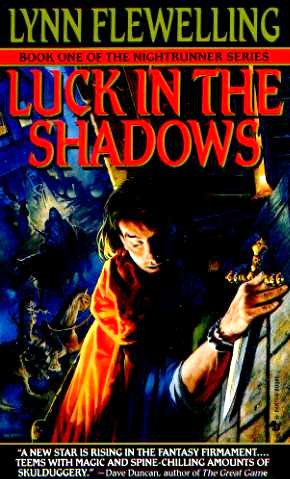
Welcome to our weekly guest post on what makes a kick ass heroine in science fiction and fantasy. This week’s author Lynn Flewelling shares about the kick ass heroines featured in her book, Luck in the Shadows, and in her Tamír trilogy, which begins with The Bone Doll’s Twin. Thanks for portraying strong women on the page, Lynn, for us all to aspire to!^*^
Since I got into the business back in the nineties there’s been a real blossoming of kick ass female heroines, and I like to think I’ve contributed a few.
Some of my own favorites, in no particular order, include Patricia Brigg’s Mercy Thompson, Kristen Britain’s Karigan, Laura Anne Gilman’s Wren, and, if you will, Bram Stoker’s Mina Harker and “that woman,” Conan Doyle’s Irene Adler (the book versions all.)
They span genres and time, but they all share one thing: guts. Which isn’t to say that they don’t get scared or sad or knocked down. But they get up and keep swinging for the fences every time.
I have a number of kick ass female characters in my books, but I’d like to talk about two: Beka Cavish, a secondary character in the Nightrunner Series, which begins with Luck in the Shadows, and Tobin/Tamír, heroine of the Tamír trilogy, which begins with The Bone Doll’s Twin. Beka is the easy one, so I’ll start with her.
Beka’s father is the best friend and long time partner in adventure of Seregil, the hero of the Nightrunner books, who has been a sort of uncle to her. From these two Beka learned sword play and a thirst for adventures of her own. There’s a war on, so she joins the prestigious Queen’s Horse Guard cavalry regiment where she excels and plays a pivotal role in several of the Nightrunner books, particularly the second, Stalking Darkness, in which she and her group of raiders, the “ghost wolves,” turn the tide of battle at a pivotal moment and help save the world.
She’s not only good with a sword, but smart, honorable, crafty, and a
good strategist. She also falls in love with a handsome foreigner. Does
she leave the cavalry and settle down to have babies? Not on your life,
sister. He goes home with her, serves as a scout in her regiment, and
she goes on with her career.
Tobin/Tamír
is more complicated. She is heir to the matriarchal throne of Skala,
but her uncle has usurped the throne and is killing off potential female
claimants, except for Tobin/Tamír’s mother who, though he displaced
her, he loves enough to spare. Not so her unborn child—or rather,
children. She gives birth to twins, a boy and a girl. To protect the
girl, the boy is sacrificed to a spell that gives his sister male form
for the first thirteen years of her life.
As Tobin, she is sent, with her squire and best friend, Ki, to serve
at court with her cousin, who is next in line to the throne. And all
this while she has no idea who or what she really is, but has a niggling
sense that something isn’t right. When she was very little she was
punished for showing an interest in girl’s toys (a well-meaning attempt
to protect her) and trained as a boy and a warrior. She finds an outlet
in art, a skill inherited from her mad, distant mother.
It all gets very complicated when “he” begins to menstruate in Hidden Warrior and
assumes he has plague. The truth comes out, and Tobin is at first not
pleased to learn that he has to change gender. By then he’s acclimated
to being a boy, although he’s desperately in love with Ki.
As Tamír, she must lead a civil war against her uncle and beloved but
flawed cousin to claim the throne and save the land. And all before
she’s sixteen. Ultimately she embraces her identity, fights a tragic
battle, and assumes her rightful place in the world. The greatest challenge of writing these characters, and others like
them, I think, is to give them what are often considered “male” skills,
without allowing them to become the infamous “men with breasts.”
They have to be tough, but feminine—not a girly stereotype feminine,
but preserving our strengths: wisdom, persistence, intelligence,
compassion, sexuality, resilience, the boundless will to protect who and
what we love, just to name a few.
No fictional character is going to embody all of those traits, and
each one will have flaws and dark sides, or should, but there is a
female essence and you have to capture and bottle it in your kick ass
heroine to make her recognizable to the reader as female.
Because that’s the point, isn’t it?
To say to the world “Women can damn well be
tough/courageous/wily/strong/wise/what-have-you, and you know what, Dear
Reader? So can you.”
About the Author
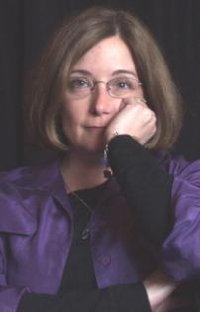
Lynn Flewelling is best known for her Nightrunner and Tamír series, but has also published short fiction and articles on writing in publications including Speculations and Writer’s Digest.
Her article “The Complete Nobody’s Guide to Query Letters” has appeared
in several books on writing. She teaches occassional workshops,
including one on a cruise ship, and enjoys interacting with students and
readers. She currently lives with her husband Douglas in Redlands,
California. When she’s not writing she can usually be found knitting,
hiking, and drinking tea.
For our regular guest post on a kick ass heroines, please welcome
Shannon McRoberts. She’s a fantasy and science fiction author, and an
artist, illustrating her own covers. Please note that her first book in
her series, Athine Verses: The Beginning
is free through the 4th of January. As an added bonus, Shannon will
give away to one of our readers a 5×7 print of some of her art. All you
need to do to enter is comment below on your favorite kick ass heroine.
Be sure to leave your email so we can contact you and Shannon can mail
you your prize, if you win. We’ll pick a winner Monday, Jan. 7th, 9am
PST.
***
I have always found myself attracted to the kick ass women in books
and TV. When I was about 5 or 6 Conan was popular. It was out on VHS
and I remember watching it and liking it (although my mother had a fit
because it was rated R). However, Red Sonja was
my favorite. I could give a crap less about Conan after that and
wanted to see the female leads on the screen all of the time. This is
why I probably enjoyed Xena, Buffy, La Femme Nikita…do
you see a pattern here? I’m also a gamer, but I have to be able to
play a girl character…preferably a fantasy styled female character.
It’s just who I am. To think I almost didn’t want to watch Star Wars
because there was no girl LOL!
I
think this is why all of my books feature strong, kick ass, smart,
stealthy, ladies—I have this inherent desire to see a strong female lead
that is both feminine and kick ass. Now, don’t get me wrong, I do
enjoy stories with helpless damsels in distress from time to time. Yet,
I would rather watch the damsel pick up a sword/gun/pipe wrench and
knock the crap out of their captor!
One of the questions I have been asked was to name some challenges
writing a strong female lead. I think for me it isn’t a challenge
because I am a strong female like my characters. I just put my own
personality into my characters. Take Athine for
instance–she is always trying to prove herself to her doubting men that
seem to think women cannot be strong leaders. I myself have fought this
stereotype my entire life and have often come out on top of the pack.
I
also like to combat the stereotype that strong women can only be
physically or emotionally ugly or they have to be a homosexual to be
“strong” or you have to be “ugly” to be smart. I see that theme over
and over in books/movies/TV. I know I took great offense to the fact
that everyone said Xena and
Gabrielle were lovers just because they were two females that kicked
ass and traveled together. I don’t remember anyone saying that about
Hercules and Eolis. This is just wrong. You can be strong, beautiful,
smart, and sexy no matter what you look like or who you choose to love.
You can be kick ass and a wife/mother/companion. You can be beautiful
and deadly. You just can’t let society tell you that it is wrong.
Maybe this is why I liked the Kill Bill movies so much?
I started writing my own series and creating my own fantasy art
surrounding the series because I saw a real lack of strong female
entertainment after Xena and Buffy ended. I needed something to love again; so, Athine
was born. Originally she was only supposed to be a single story, but
as of this date she has spiraled into four stories and has now connected
with another kick ass heroine Zarra from my The Secret of Genetic Corp X. In Worlds Collide the fantasy like world of Athine crashes into the sci-fi like world of Zarra.
The story will then continue in my current work in progress Cursed
Bloods. I take what you think you know about mythology and mix it up. I
also take your normal character set up for fantasy–some heroic muscular
bound male–and throw him on the sidelines. In my books there is a lot
of role switching if you want to think of it that way. The men are not
weak, but they play second fiddle to most of the ladies!
*** Shannon McRoberts currently resides in Kentucky and is a full time
working mother and wife. She loves playing MMORPGs like Guild Wars 2
and has now become addicted to Skylanders Giants. Of course she only
plays with Hex, a strong female necromancer, and is anxiously awaiting
the Ninjini giant to be released..yes she is a female too! Shannon’s books are here: http://www.amazon.com/Shannon-McRoberts/e/B0060ZFD60.
Today’s guest contributor, Ryk E. Spoor, discusses how to measure the heroicness of the kickass heroine. Enjoy!
***
I’ve written several books with kickass heroines; the two which are solo works are Grand Central Arena and Phoenix Rising, whose kickass heroines are, respectively, Captain Ariane Stephanie Austin of the Holy Grail, and Kyri Victoria Vantage, Phoenix Justiciar of the god Myrionar. In some ways the two women are similar – both know how to fight, both have the will to continue even when they’re badly beaten down in one way or another, and both are crusaders trying to protect the people who matter to them. But in other ways they’re quite dissimilar. Ariane is a daredevil, a thrillseeker who used to race at orbital
speeds because she found it fun, a partier and two-fisted brawler, a
woman who never expected to have more responsibility than just
making sure her pit crew was taken care of, and suddenly finds herself –
quite literally – potentially responsible for the well-being of the
entire human species. Kyri, by, contrast, is a much more serious
character, very much aware of her responsibility to others as a member
of the Vantage family (local lords/nobility), expecting to end up as
either a priest of the god Myrionar or perhaps as an adventurer, who
ends up chosen by Myrionar to be the one true Justiciar, holy warrior
for the faith, to avenge the deaths of Kyri’s family and destroy the
now-corrupt original group of Justiciars. So to answer the original question, my first reaction is: the same measure as the Kickass Hero.
What in the descriptions above couldn’t apply to various male
characters? Nothing. And because of that, I don’t think of my characters
as “Female Kickass Heroes”, but just as Kickass Heroes who just happen
to have, as one of their less-relevant characteristics, the fact that
they’re female. So what’s a Kickass Hero, then? In my view, such a hero has to be both badass
– able to lay the smackdown on even formidable opponents, so tough that
they’re the kind of person that can get run through with a sword, and
the guy doing the running-through is still terrified that this
won’t be enough – and have other traits that make them notable, powerful
within their field of expertise, so that their respect isn’t JUST from
the fact that they can probably break anyone who disagrees with them. Ariane and Kyri both fit that description to a T. When Amas-Garao realizes that Ariane keeps getting up,
despite her being apparently utterly outmatched, his reaction is
disbelief; no one could be that determined to get themselves killed, so
willing to fight against impossible odds. When Kyri finally confronts
the killer of her brother, even he cannot keep a momentary expression of
fear and uncertainty from his face. I should note that I like sympathetic kickasses, not
grim-faced gritty angst-machines. While Kyri Vantage was, in some ways,
originally envisioned as a fantasy-world Batman, I didn’t want her to be
grim and humorless. She is fairly serious, but not devoid of
humor, or of the ability to find enjoyment and fun in the world around
her even though she has, honestly, lost much. Her losses, and her
earnest intentions to try to save even those who have walked darker
paths, make her – I hope – more human and appealing than she might be
otherwise. Ariane is playful and, admittedly, sometimes irresponsible, as one
might expect from someone whose initial training was more for “Extreme
Sports” than for “Interstellar Diplomat-At-Arms”, which is a better job
description for her position in The Arena. This, plus her occasional
almost paralyzing uncertainty as to whether she really, truly, is
the right person for the staggering responsibilities resting on her
shoulders, helps tell us that even as a heroine she is human. The other measure of a true Kickass, as I said, is whether
they can translate their badassery into something other than pure
physical confrontation. Kyri Vantage does this in one of my absolute favorite scenes, when she demands that her god COME DOWN and explain itself to her. You read that right: she calls out her own deity and demands an explanation… and she gets one. Ariane Austin, too, gets her own moment; it’s a quieter, more subtle
moment, but in a conversation with someone who is, in all likelihood,
the most utterly badass person she’s ever met – the product of an
illegal and insane project to produce superhuman beings – she manages
to take control of the conversation, give him advice, directions… and
dismiss him, without giving Dr. Marc C. DuQuesne a chance to do more
than simply agree. So what measure is a Kickass Heroine? The same measure as any
true Hero: three times as large as life, four times tougher, and five
times scarier… and exactly one hundred percent human. *** Born
in Omaha, Nebraska, Ryk E. Spoor is a long-time gamer, SF/F fan, and
author of science fiction and fantasy, published by Baen Books since
2003. His works range from hard SF to epic fantasy. He lives in Troy, NY
with his wife, 4 children, and a poodle
**Read these posts and leave a comment telling us what you think! Our opinions matter.
We all own a ton of books. And then we buy some more books. And then we borrow from the library or from friends. and then there is netgalley. you might have a few of ARCs sitting on the coffee table.
How do you decide what to read next? How do you prioritize?
31 Responses to "How do you decide what to read next?"
I used to have this regular dilemma, but I’ve now figured out quite a simple solution: I read them in order I received them, oldest to newest, that way nothing gets cast aside or lost. Hope this helps.
It depends a lot; right now I’ve got a new book list for school and have therefore been deprived of choice. When I don’t have assigned reading, I do draw lists of what to read next – and then read something completely different. (Yeah, lists don’t really work for me…) It’s mostly based on mood. Sometimes I want to read fantasy, sometimes romance, sometimes a classic, and I try to go with that. Usually I have a book in mind by the time I’m finishing the previous one, which is good, because if I don’t, I’m going to spend a day or in a bad case two trying to figure out what it is I want to read! And frankly, that’s time spent not reading and therefore bad.
Tl;dr – mood. Whatever I feel like by the time I finish the previous book.
Library return date is the first decision point with a close second of what I am not able to renew.
After that, I try to read something that’s different from what I just read. If I just finished a fantasy novel, I’ll swing over for some sci-fi. FInish a mystery and move onto urban fantasy.
Sometimes I’m on a review deadline or tell a publisher I’ll read the book if they send it to me, those get priority. Otherwise, if I can’t decide to read from a small stack of books (3-6 usually), I’ll place those in front of my wife and she will pick for me. She claims to have a system, but the only element of that system she’s admitted is if she thinks the figure on the figure violates Myke Cole’s trigger discipline rule, she will not select it.
I’m probably horrible for saying this, but the cover is a pretty huge factor for me xD
I go from author I like > Friend told me it’s good > cool, evil-looking cover.
I always try to read books from publishers first. And I have so many that I end up reading ONLY books from publishers. I only buy books I really really really want to read, so when I deviate from my review pile, it doesn’t really matter which book I pick up next, because they all are books I’m dying to read. I NEVER go to the library, so that isn’t a factor for me.
I use a variety of methods. I’ve done polls on my blog asking people to recommend which to read next. Another time, I looked through my unread and owned list in Goodreads and alternated between best rated and worst rated. Last time, I just looked through series I’ve started and chose books that continued the series.
My reading order can depend on if I own the book or it’s checked out of the library. If I own it, I may feel I have more time to get to it while a library book has a due date. A due date looms larger if it’s an e-book checked out to my card number because there is little I can do if the book expires and I have not read it yet (besides either checking it out again or buying it, of course). There are times I’ve kept a library book an extra day or two to finish it since the fine for keeping it is less than the purchase price of the book and I tell myself that I am funding the library to buy more books I might want to read someday.
The pressure of a deadline can also be extended to group reads or ARC copies that have asked for a review within a certain time frame, of course.
And sometimes it can be a mood will strike me. For example, if I feel in the mood for a certain type of genre novel or author based on a recent TV show or movie viewing. I recently watched the pilot for Bosch on Amazon and after seeing it, I pulled out the copy of City of Bones from the to be read pile and enjoyed it. (The series will follow the story of City of Bones as the central arc for season one, I’m told). Other times I may have the best of intentions to read a certain series of books but will sometimes throw in something to break up the pattern a bit and hopefully help me enjoy both the addition and the series a bit more by avoiding burnout.
Of course, there are certain books and authors that are “must read” as soon as I get my grubby paws on a copy of their latest works — Stephen King, Laura Lippman are just two examples of this for me.
The only books I try to schedule are my ARCs, but even then I tend to pick and choose based on what I’m in the mood for. Sometimes my regular TBR suffers for it, but it works far better than trying to force myself to read, say, an epic fantasy when I’m in the mood for sci-fi, and so on.
Sometimes, it’s my mood. Other times, the cover. There are days I’ll just pick randomly from the pile. The random picking doesn’t always work out though but every once in a while there’s a huge reward. When I’m really stuck, I go to my favorite bloggers and see what they’re recommending.
I stare at my 300 unread novels nicely packed on a shelf and go with whatever appeals at the moment. Perhaps based on a recent review I’ve read of an author I’m frequently thrilled with. If I don’t feel “in the moon in the first 40 pages of that book” I move to another one.
Though feeling “in the moon” is seemingly not an error
(“In the mood”? “Over the moon”? Let’s have both!)
Childish pedantry aside, yes, this. I was going to say with the exception that I’ve not got quite as many as 300 waiting to go, but once I’ve factored in the kindle it might not be that far off.
I usually have a reading list which I fill with way more titles than I can handle, so I can choose from a wide variety to suit whatever mood strikes me. I would say I choose my next read based on a lot of factors, but it mostly comes down to when the book is released (if it’s an ARC I have) and what I’m in the mood for at the time!
I choose mostly based on mood, and partly according to if I’ve signed up for some challenge or other. I will never be in the mood to read Candide, but I’m signed up for a readalong this month and it turns out to be not as scary as I thought. Oh, plus March is Diana Wynne Jones month, so everybody should be reading her.
With 30 hard copy books and over 150 on my Kindle, I tend to go for something different from the one I have just finished. It’s handy to have Good Reads where I list the hard copies so I can attempt to read them in a chronological order (i.e. in the order that I acquired them).
With the Kindle it is far less planned. I just skim through and see what catches my eye
If I’m in a reading challenge, I’ll generally choose from that first. I try to not over-commit to challenges, so I usually have some leeway. If it’s not something from a challenge, it’s usually the next book in one of the twenty-ish series I’ve started but not finished. After that, it’s probably one of the books in the the 100-ish long TBR list.
Or maybe something completely new that struck my fancy. I probably don’t spend more than 30 minutes or so deciding.
I read whatever I am feeling at the moment. I have refused to run a schedule of any kind, just not my way. IF I am down to two books I may go by release date, but even then I can be distracted by a trip to the library. Or a book deal. Until I am 5% into a book my reading is open to change.
I usually try to mix it up a bit. If I’ve read a big literary novel, I might turn to a mystery or thriller as a good change of pace. Then I’ll thread in some SF or fantasy and by that time I’ll come back to the literary novel.
Sometimes I curl up with a big pile of books in bed and i read the first few pages of each until something grabs me and won’t let me go. And sometimes I know exactly what I want – like comfort food for the brain. And Netgalley and Eidelweiss add to the pile of choices. Hmm….staring longingly at pile of library books.
I am a mess with this now! I used to be all so excited to read the next/last book in a series that I would nearly burst something waiting for it to appear. Now, I have so many unfinished series that I should be slapped! I’m like a big kid in a sweet shop. An old fashioned sweet shop with all your favourite sweets that you haven’t seen for donkeys. I’m all like ‘yay, sherbert fountain, oh look, fruit salad, no way there’s pear drops – omg you won’t believe this they’ve got Caramac!!’. Now, you probably haven’t heard of any of those things – but you get the gist! I think I should make a list – but like others say I’m more a read for the mood type of person. I do think I should put my ARCs in order because sometimes I’m on the last minute with them. The only time I really stick to anything is where I have something set. Any sort of blog hop, readalong or event – if I have a schedule I stick to it (it might be within two minutes of the deadline but come hell or high water I stick to it!)
I dread finishing a book. I agonize for an hour or so, pacing in front of the bookshelves, before I finally pick one at random and worry for the first 20 pages or so that I might have chosen a better one.
Library books always get top priority since I have to give them back, while the books I own can wait indefinitely. Other than that, I choose based on how I feel. If I just read a long fantasy epic, I might go for some science fiction to change things up. Or if I just finished a long book, I’ll go for a short one. And if I’ve been reading a lot of fantasy and science fiction, I’ll read historical fiction or a thriller. I rarely read the same genre back to back and somehow this method has a way of balancing itself out.
Since I seem to like a lot of variety in my reading, and I’m always finding more books to read, I keep a list in a lovely mini journal. It’s not alphabetical or anything, I just add authors as I find them and list all the books in each series I’m interested in, and cross off the ones I’ve read, so I can keep track as I go. I also draw a little symbol next to each author or series so I know what genre it is at a glance, that way I can find whatever kind of book I’m in the mood for (scifi, fantasy, steampunk, vampires, etc). I call it my book book.
It completely depends on my mood. Whatever I’m in the mood for, that’s what I’ll read. Any attempt by me to schedule my reading in advance, or set rules for myself to meet, falls apart because I always just end up reading whatever book in my library bag appeals to me the most.
Mostly mood. I have this thing when I start thinking about the next book as soon as I get down to the last 30 pages or so in the current one.
Mood means I sometimes start three or so books at the same time, and then I switch them depending on what I feel like reading.
I read ‘for work’, I suppose. This means I need to review something, or somebody gave me a galley that has a bunch of other people waiting for it.
If it’s due at the library.
Hmm. This has changed a lot as I have gotten more serious about the blog. Now I have something of a flow chart: Review copy and/or project -> Library -> Something from my bookshelf, with a parallel line of TBR book (off any of several TBR lists) -> series I should finish -> new release -> whatever. On the z-axis are questions of gender and ethnicity, since I have been making a point to monitor my consumption of straight, white, Anglo-Saxon males. My mood is the wild card that generally helps whittle down multiple options.
Needless to say, this is a complicated assessment process and takes a fair amount of time. It’s also a reason I have not started actively seeking review copies.
** groan ** It’s pretty much been said by someone or other already, but I’ll chime in.
the SETUP:
I have three or four thousand books around here, about half of them read. I don’t get ARCs, don’t read e-books. I usually have three or four books on hold at the library. I read SF-F, non-fiction, mystery, pulp fiction reprints, art books, poetry.
the PROCESS:
If I have a review due, that comes first. Then library books get read. Then books in a series, say a trilogy, which I will read straight through. (I have a lot of trilogies sitting here not completed by the author, and I’m waiting. Do you hear me, Patrick Rothfuss??
Like many others I like to switch genres, mostly between SF, F and mystery. I usually have a couple of books going at once and a short TBR to go to next, but sometimes I just go browse the shelves or look at the catalog (I have all my books cataloged) to see what is missing the “R” next to it. And yes, as others say, mood.
At the moment I use a monthly reading challenge from a Goodreads bookclub. The challenge involves reading 3-8 books to spell out a South African word (either slang, or something from one of the 11 official languages). First, I try to fit in whatever review copies I have for books being published that month. If I need more books, I choose some from my ARC backlog (it’s my goal to reduce that this year!). I might also pick a buzz book, group read, or something I need for a different reading challenge.
I actually didn’t think this system would work for me, but having a plan and the goal of completing the monthly challenge has been fantastic. Before, I used to just try to get to all the review copies for that month, but sometimes that wasn’t structured enough or didn’t give me enough motivation to read what I’d planned.


Welcome to our weekly guest post on what makes a kick ass heroine in science fiction and fantasy. This week’s author Lynn Flewelling shares about the kick ass heroines featured in her book, Luck in the Shadows, and in her Tamír trilogy, which begins with The Bone Doll’s Twin. Thanks for portraying strong women on the page, Lynn, for us all to aspire to!^*^

Tobin/Tamír is more complicated. She is heir to the matriarchal throne of Skala, but her uncle has usurped the throne and is killing off potential female claimants, except for Tobin/Tamír’s mother who, though he displaced her, he loves enough to spare. Not so her unborn child—or rather, children. She gives birth to twins, a boy and a girl. To protect the girl, the boy is sacrificed to a spell that gives his sister male form for the first thirteen years of her life.
It all gets very complicated when “he” begins to menstruate in Hidden Warrior and assumes he has plague. The truth comes out, and Tobin is at first not pleased to learn that he has to change gender. By then he’s acclimated to being a boy, although he’s desperately in love with Ki.
For our regular guest post on a kick ass heroines, please welcome Shannon McRoberts. She’s a fantasy and science fiction author, and an artist, illustrating her own covers. Please note that her first book in her series, Athine Verses: The Beginning is free through the 4th of January. As an added bonus, Shannon will give away to one of our readers a 5×7 print of some of her art. All you need to do to enter is comment below on your favorite kick ass heroine. Be sure to leave your email so we can contact you and Shannon can mail you your prize, if you win. We’ll pick a winner Monday, Jan. 7th, 9am PST.
***I have always found myself attracted to the kick ass women in books and TV. When I was about 5 or 6 Conan was popular. It was out on VHS and I remember watching it and liking it (although my mother had a fit because it was rated R). However, Red Sonja was my favorite. I could give a crap less about Conan after that and wanted to see the female leads on the screen all of the time. This is why I probably enjoyed Xena, Buffy, La Femme Nikita…do you see a pattern here? I’m also a gamer, but I have to be able to play a girl character…preferably a fantasy styled female character. It’s just who I am. To think I almost didn’t want to watch Star Wars because there was no girl LOL!

I think this is why all of my books feature strong, kick ass, smart, stealthy, ladies—I have this inherent desire to see a strong female lead that is both feminine and kick ass. Now, don’t get me wrong, I do enjoy stories with helpless damsels in distress from time to time. Yet, I would rather watch the damsel pick up a sword/gun/pipe wrench and knock the crap out of their captor!

I also like to combat the stereotype that strong women can only be physically or emotionally ugly or they have to be a homosexual to be “strong” or you have to be “ugly” to be smart. I see that theme over and over in books/movies/TV. I know I took great offense to the fact that everyone said Xena and Gabrielle were lovers just because they were two females that kicked ass and traveled together. I don’t remember anyone saying that about Hercules and Eolis. This is just wrong. You can be strong, beautiful, smart, and sexy no matter what you look like or who you choose to love. You can be kick ass and a wife/mother/companion. You can be beautiful and deadly. You just can’t let society tell you that it is wrong. Maybe this is why I liked the Kill Bill movies so much?

Today’s guest contributor, Ryk E. Spoor, discusses how to measure the heroicness of the kickass heroine. Enjoy!
Born in Omaha, Nebraska, Ryk E. Spoor is a long-time gamer, SF/F fan, and author of science fiction and fantasy, published by Baen Books since 2003. His works range from hard SF to epic fantasy. He lives in Troy, NY with his wife, 4 children, and a poodle


.jpeg)


 Hope this helps.


join the conversation Cancel reply