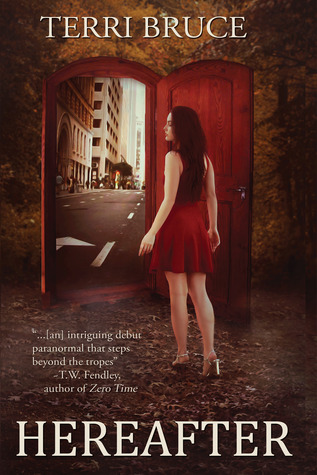
Too many obstacles, too many people to save, and the thing Irene most desperately wants—to return to her old life—seems farther away than ever. Only one thing is clear: moving on will require making a terrible sacrifice.
GUEST POST
On Writing Difficult Choices
I’m so thrilled to be here today, celebrating the release of my third novel, Whereafter (Afterlife #3). This is the third book in my Afterlife series, which tells the story of a woman named Irene Dunphy who dies and must learn to navigate the afterlife as a ghost.
One of the key themes in the series is choices: Irene makes a lot of bad choices, there’s just no getting around it. At the beginning of the first book, Irene makes the choice to drive drunk, and she ends up dying because of it. It becomes clear that this is part of a pattern of bad decisions—as Irene mentions various past boyfriends, it becomes clear that she’s had a lot of bad relationships. Even her choice of friendships seems questionable—her friends let her drive drunk the night she died.

The character of Irene is very different from me. I don’t drink—at all. And I would NEVER drive impaired. I mean NEVER. I mean… No. Just… No. It’s not even a question. And yet, people do it. There are stories in the news every day of people driving under the influence and injuring (or killing) themselves or other people. How does this even happen? As a writer, I find it fascinating to write about people who think very differently from myself, because it gives me a chance to explore perspectives and ideas that are very different from the ones I hold.
For example, on the other end of the spectrum, is the character of Andras, a twelfth-century Spanish knight that Irene meets in the second book. He’s very devout and religious. I am not. And yet, I know for many people, religion brings them comfort and support. So, once again, I had to be able to write about characters making choices or behaving in a way that is very different from myself, and the way I think and operate. I wanted to make sure that Andras was a real, fully-fleshed out person and not a caricature. I wanted his faith to be believable and sympathetic.
In the third book, Whereafter, Irene encounters a woman named “Heru.” Heru is a servant in a rich man’s household. The rich man transfers responsibility for Heru to Irene as a gift/reward. Irene is horrified and immediately sets Heru free. Only—Heru doesn’t want to be free. Heru is honored to serve such an important person, and she believes that her service ensures her a place of honor in the afterlife. Plus, Heru has no other source of support—without Irene’s (and Andras’s) protection and support, she will be on her own in a very dangerous place and will likely be killed. This was a particularly difficult scene to write because I didn’t want to appear to be saying that I thought there was ever an instance where slavery is good or acceptable. However, I did want to show that when we make decisions FOR or ABOUT people rather than WITH them, then the “right” decision can still have negative consequences.

While Irene has shown a lot of growth in the first three books of the series (of six), she still hasn’t quite learned this last lesson. In the second book, Irene makes the decision to cut off contact with Jonah—for his own good. It might be the right decision, but because she makes it pre-emptively and without discussing it with him, she actually makes the situation worse. Jonah is so angry at not having a say in this big decision that affects him, he becomes obsessed with finding Irene—just so he can give her a piece of his mind—which puts his life in jeopardy.
On the flip side, people also keep making decisions for Irene. In the second book, her romantic partner issues an ultimatum that Irene either go where he wants to go or he’ll leave without her. There is no compromising. In Whereafter, Andras makes a difficult and irrevocable decision, pre-empting Irene’s ability to be noble and sacrifice herself for him, which makes her mad. She wanted to have the opportunity to do the right thing for once, and it was taken from her. For me, these are the kinds of choices and difficult decisions that are fun and interesting to write about—how do we negotiate difficult choices when they involve other people? For Irene, her personal journey is about learning how to make decisions in partnership with other people. Irene, in her soul, is a control freak—she likes to be in charge. The “loss of power” involved in making a decision in partnership with someone else is frightening to her. But if she never learns how to do that and never learns how to compromise, then how can she ever truly have an equal partnership/relationship with anyone?
Will Irene ever get good at negotiating difficult decisions? Well, readers will just have to stay tuned and see!