Posted: 30 Jan 2014 09:32 AM PST
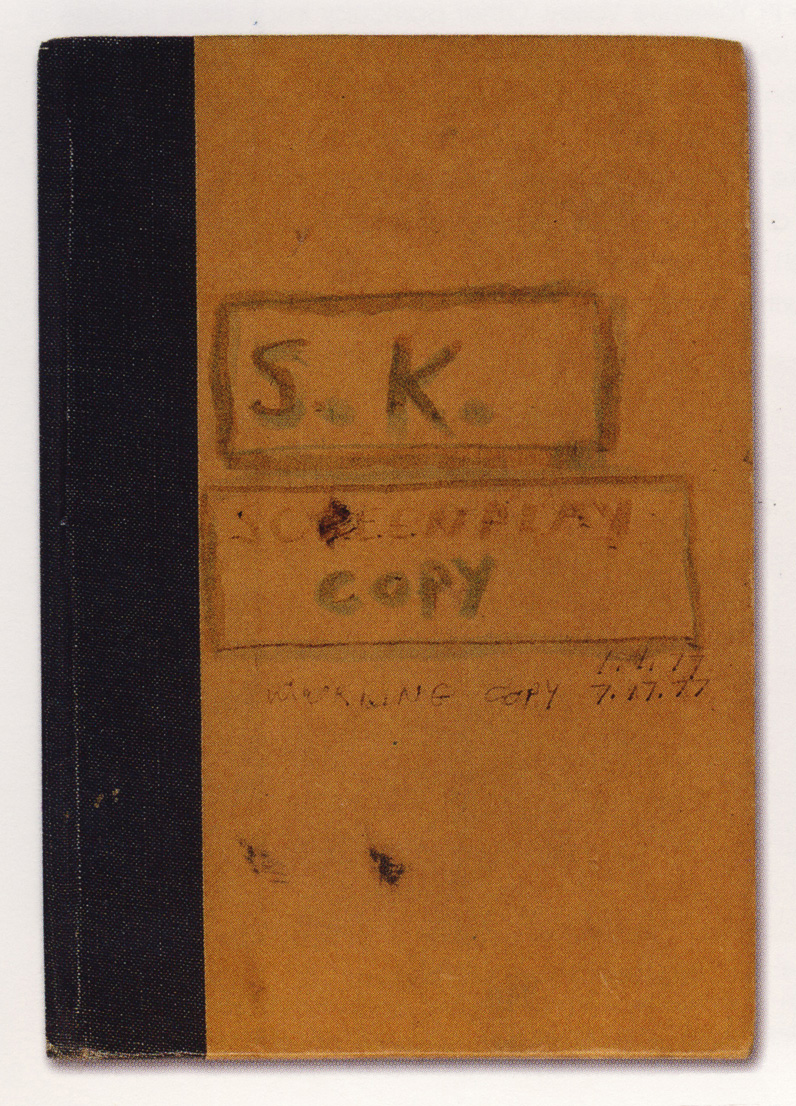
The web site Overlook Hotel has posted pictures of Stanley Kubrick’s personal copy of Stephen King’s novel The Shining,
which is normally kept at the Stanley Kubrick Archive, but has been
making the rounds in a traveling exhibition.
The book is filled with highlighted passages and largely illegible notes in the margin—tantalizing clues to Kubrick’s intentions for the movie.
The site features a picture of the book’s careworn cover along with
two spreads from the book’s interior —pages 8-9, where Jack Torrance is
being interviewed by hotel manager Mr. Ullman, and pages 86-87 where
hotel cook Dick Hallorann talks to Jack’s son Danny about the telepathic
ability called “shining.” (Click on the images to enlarge.)
Much of the marginalia is maddeningly hard to decipher. One of the notes I could make out reads:
Maybe just like their [sic] are people who can shine,
maybe there are places that are special. Maybe it has to do with what
happened in them or where they were built.
Kubrick is clearly working to translate King’s book into film. Other notes, however, seem wholly unrelated to the movie.
Any problems with the kitchen – you phone me
When The Shining
came out, it was greeted with tepid and nonplussed reviews. Since then,
the film’s reputation has grown, and now it’s considered a horror
masterpiece.
At first viewing, The Shining overwhelms the viewer with
pungent images that etch themselves in the mind—those creepy twins, that
rotting senior citizen in the bathtub, that deluge of blood from the
elevator. Yet after the fifth or seventh viewing, the film reveals
itself to be far weirder than your average horror flick. For instance,
why is Jack Nicholson reading a Playgirl magazine while waiting
in the lobby? What’s the deal with that guy in the bear suit at the end
of the movie? Why is Danny wearing an Apollo 11 sweater?
While Stephen King has had dozens of his books adapted for the screen (many are flat out terrible), of all the adaptations, this is one that King actively dislikes.
“I would do every thing different,” complained King about the movie to American Film Magazine
in 1986. “The real problem is that Kubrick set out to make a horror
picture with no apparent understanding of the genre.” King later made
his own screen version of his book. By all accounts, it’s nowhere as good as Kubrick’s.
Perhaps the reason King loathed Kubrick’s adaptation so much is that
the famously secretive and controlling director packed the movie with so
many odd signs, like Danny’s Apollo sweater, that seem to point to a
meaning beyond a tale of an alcoholic writer who descends into madness
and murder. The Shining is a semiotic puzzle about …what?
Critic after critic has attempted to crack the film’s hidden meaning. Journalist Bill Blakemore argued in his essay “The Family of Man” that The Shining is actually about the genocide of the Native Americans. Historian Geoffrey Cocks suggests that the movie is about the Holocaust. And conspiracy guru Jay Weidner has
argued passionately that the movie is in fact Kubrick’s coded
confession for his role in staging the Apollo 11 moon landing. (On a
related note, see Dark Side of the Moon: A Mockumentary on Stanley Kubrick and the Moon Landing Hoax.)
Rodney Ascher’s 2012 documentary Room 237 juxtaposes all of these wildly divergent readings, brilliantly showing just how dense and multivalent The Shining is. You can see the trailer the documentary above.
Related Content:
Making The Shining
The Making of Stanley Kubrick’s The Shining (As Told by Those Who Helped Him Make It)
Room 237: New Documentary Explores Stanley Kubrick’s The Shining and Those It Obsesses
Rare 1960s Audio: Stanley Kubrick’s Big Interview with The New Yorker
Jonathan Crow is a Los Angeles-based writer and
filmmaker whose work has appeared in Yahoo!, The Hollywood Reporter, and
other publications. You can follow him at @jonccrow.
Stanley Kubrick’s Annotated Copy of Stephen King’s The Shining is a post from: Open Culture. You can follow Open Culture by signing up for our Daily Email. That is the most reliable and convenient option. You can also find us on Facebook, Twitter, and Google Plus.


No comments :
Post a Comment